Most four-day tours in Georgia are a drive with stops. This one has you walking over a 3,338-metre pass on the second morning and sitting in a raft on the fourth, and between the two you sleep inside a medieval fortress.
It starts conventionally enough — north out of Tbilisi on the Georgian Military Road, the reservoir, Ananuri, the pass, and then Gergeti Trinity on its hill with Kazbek behind it, which is the photograph everybody has already seen and which is still better in person than in the photograph. You sleep that night in Juta, at 2,200 metres, in a village at the end of a road, under a wall of rock towers that people call the Georgian Dolomites because nobody has come up with anything better.
Then Day 2, which is the reason to book this rather than something easier. Twenty-three kilometres from Juta to Roshka: up through meadows, past the three Abudelauri lakes — one milky white with glacial silt, one clear blue, one green — and over the Chaukhi Pass at 3,338 metres. Eleven hundred metres up, fourteen hundred down, eight to ten hours. It is a long day and you will know about it at the end.
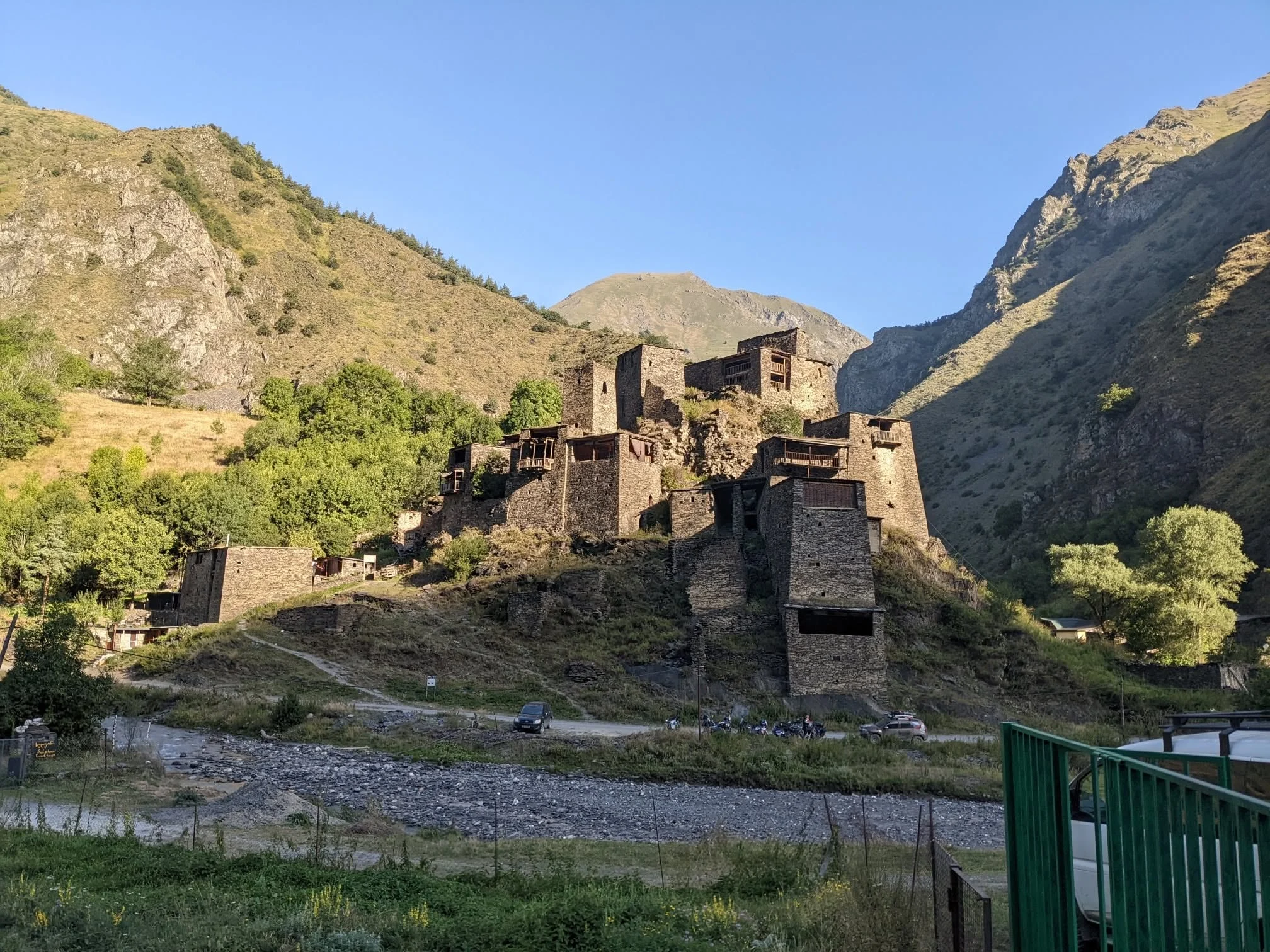
Roshka puts you in Khevsureti, and Khevsureti is the strange part. The Khevsurs were mountain fighters who kept their own courts, their own oaths and, according to more than one nineteenth-century traveller, chainmail, into a period when the rest of Europe had railways. What they left is Shatili — sixty stone towers grown into one another on a spur above the Argun, lived in until the 1960s, and you sleep in it — and Mutso, the same idea abandoned on a cliff and never restored.
Day 3 you ride. Local mountain horses, a local horseman, and a long afternoon through highland valleys where you will see shepherds and not much else. Day 4 you get on the Aragvi in a raft for fifty minutes of Class II–III water, dry off, and drive back to Tbilisi.
Book this if you can manage one demanding mountain day among three easier ones, you are happy on a horse at walking pace, and shared bathrooms in a family guesthouse sound like part of it rather than a compromise. Don’t book it if Day 2 sounds like too much — it is 23 kilometres at altitude and there is no shortcut off the pass once you are on it. Tell us what you have walked before and we will say honestly whether this is the right tour.
What you’ll see
Tour highlights
- Chaukhi Pass, 3,338 m. The high point of the tour and the day people book it for — up from Juta through alpine meadow to a col with the Chaukhi towers behind you and the whole of Khevsureti opening up in front.
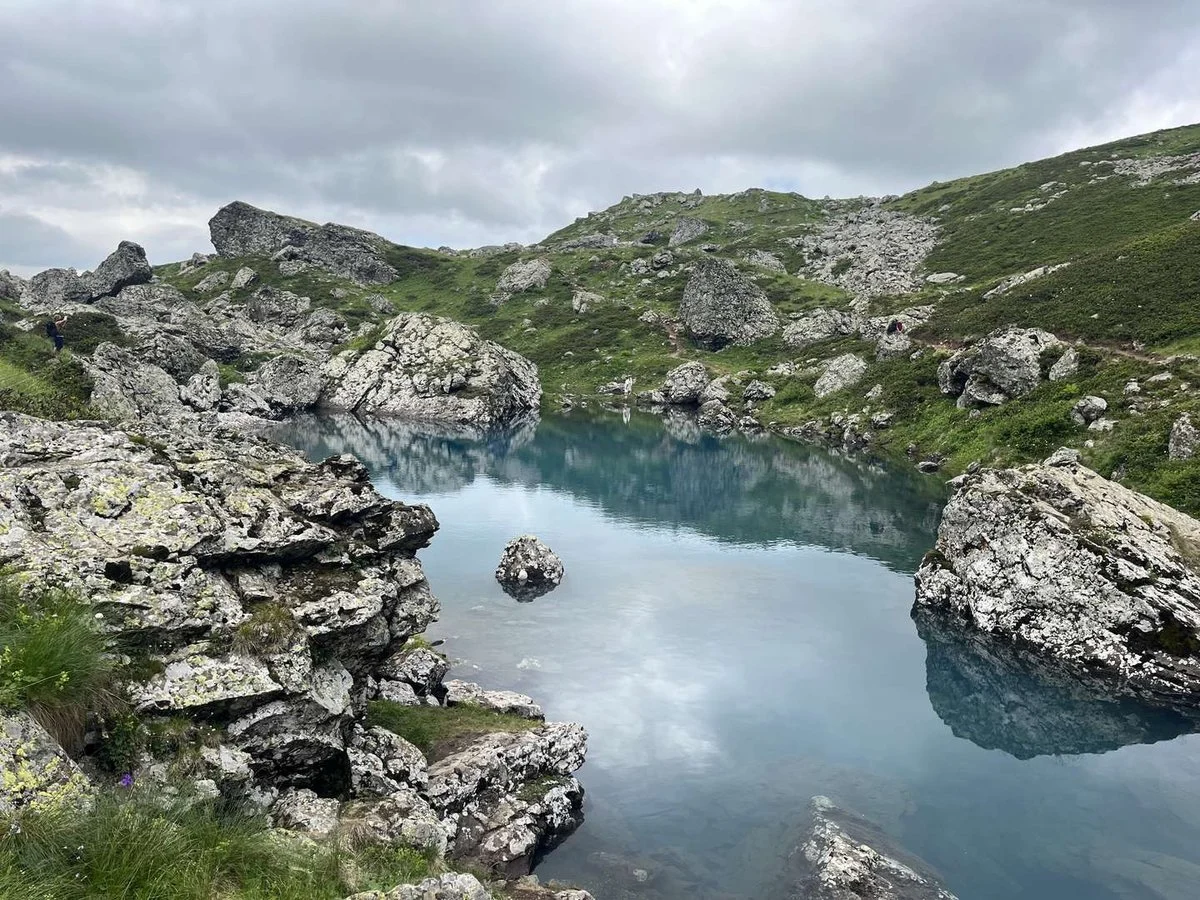
- The Abudelauri lakes. Three of them within a couple of kilometres, and they are genuinely three different colours: white with glacial flour, clear blue, and a deep green from the minerals in the rock. Photographs make it look like a trick.
- Gergeti Trinity Church, 2,170 m. A fourteenth-century church on a hill with Mount Kazbek at 5,047 m behind it. The most photographed thing in Georgia and it still works.
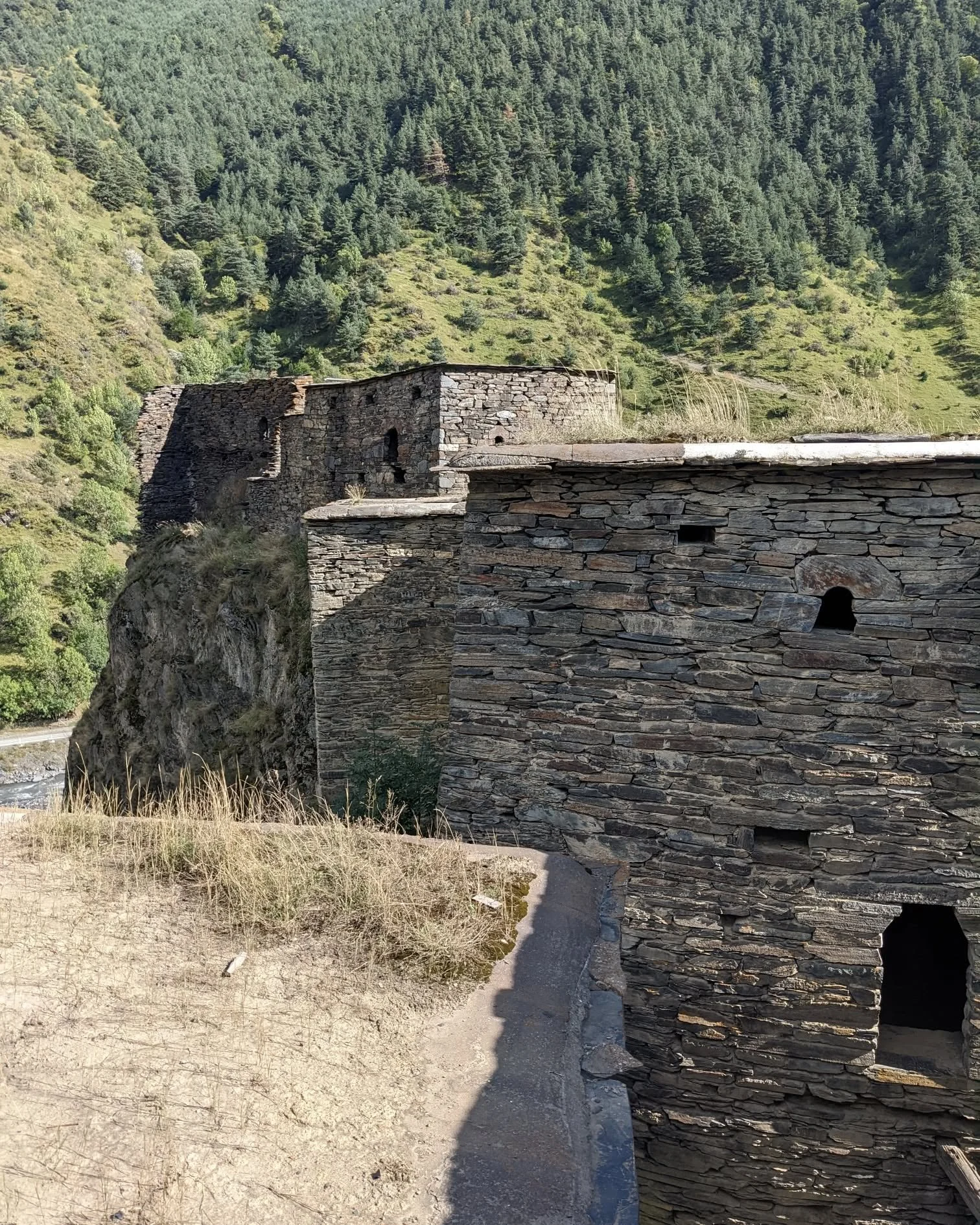
- Shatili — and you sleep in it. Around sixty stone towers merged into a single defensive block on a spur above the Argun gorge, inhabited until the 1960s. Not a museum village; a guesthouse inside it.
- Mutso. The same architecture abandoned on a cliff face above the gorge, an hour’s climb from the road, left largely as it was when its community left in the Soviet period.
- A day on horseback in Khevsureti. Sturdy local mountain horses at walking pace with a horseman who knows the valleys — no experience needed, and it covers ground that no vehicle reaches.
- Rafting the Aragvi. Fifty minutes of Class II–III water to finish, with guides, helmets and everything else provided. Exciting and not frightening — which is the correct combination on the last morning.
- The Chaukhi massif itself. Vertical rock towers rising straight out of the meadow above Juta. Climbers come from all over for them; you get to walk underneath.
- Ananuri and Jinvali. A fortified church complex on a headland above a green reservoir, twenty minutes off the road on the first morning.
- Two guesthouse nights in Khevsureti. Khinkali, home bread, and hosts who will keep filling the plate after you stop.
Step by step
Tour itinerary
Day 1 · Tbilisi — Georgian Military Road — Kazbegi — Juta
Driving about 150 km · 6–8 km on foot · max 2,395 m at the Cross Pass · lunch and dinner · guesthouse in Juta, 2,200 m
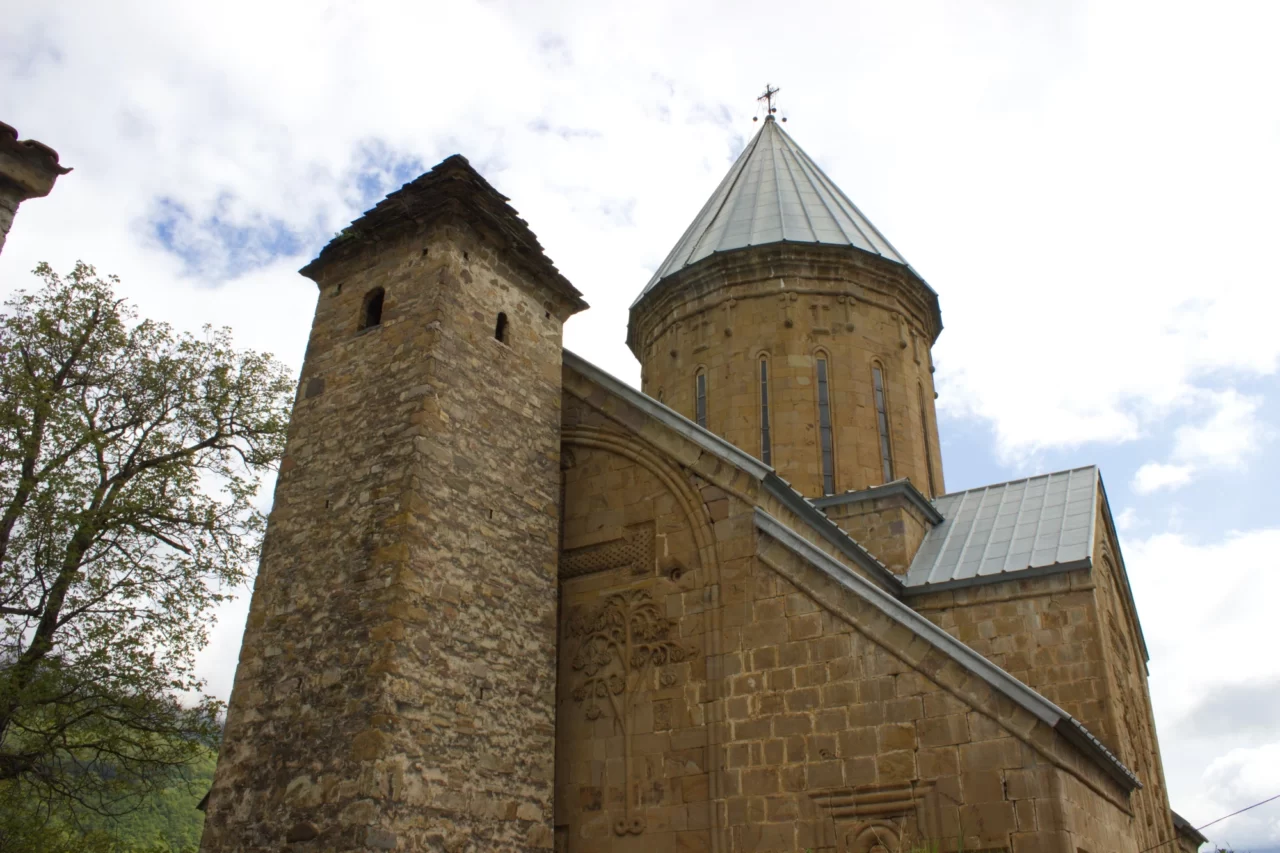
An early start north out of Tbilisi on the Georgian Military Road, which has been the way through this range for as long as there has been a way. Two stops before the mountains get serious: the Jinvali reservoir, which is an improbable green, and Ananuri just above it — a fortified church complex on a headland, seventeenth-century, with carved stonework worth the twenty minutes.
Then the road climbs to the Cross Pass at 2,395 metres. On a clear day you get your first sight of Kazbek from the viewpoint, and on any day you get the sense that you have left the lowlands behind properly.
At Stepantsminda we change to 4×4s for the climb up to Gergeti Trinity, at 2,170 metres, with Kazbek at 5,047 m directly behind it. You can walk it instead if you would rather — it is about three hours up — but Day 2 is long and most people take the jeep. If the timing works we stop at the Gveleti waterfall in the Dariali gorge on the way back.
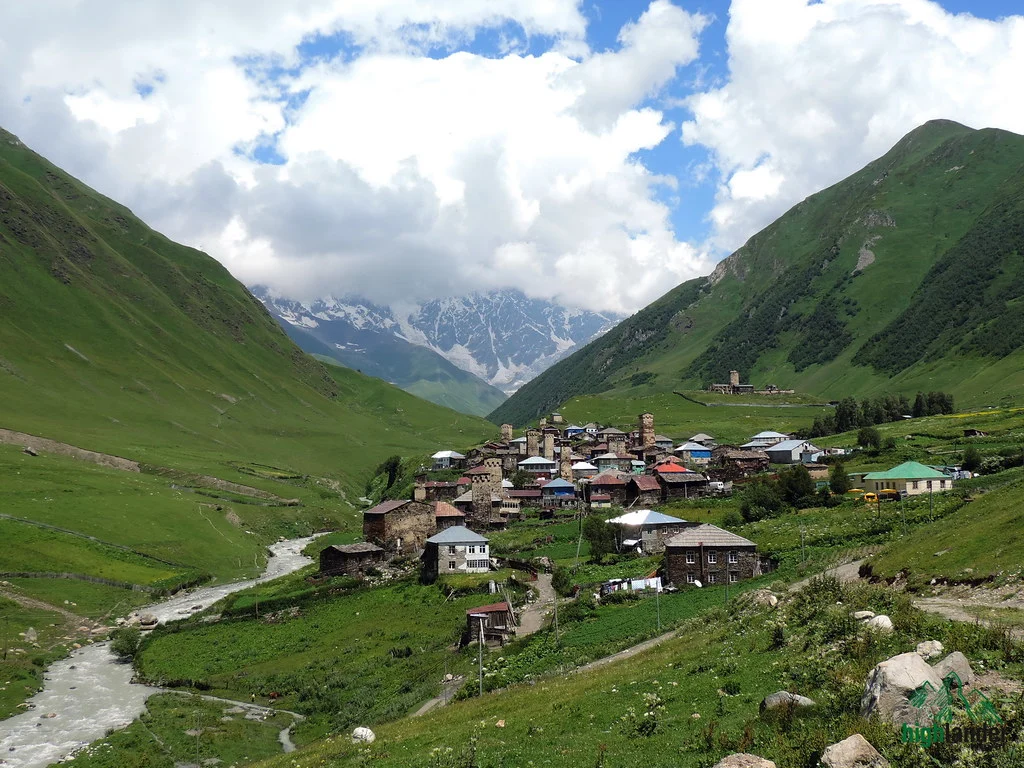
Late afternoon we drive to Juta, one of the highest inhabited villages in Georgia at 2,200 metres, at the end of the road under the rock towers of the Chaukhi massif. Guesthouse, dinner, and a good look at tomorrow’s route from the terrace.
Day 2 · Juta — Chaukhi Pass — Abudelauri lakes — Roshka — Shatili
23 km on foot · 8–10 hours · +1,138 m / −1,388 m · max 3,338 m at the Chaukhi Pass · then about 60 km driving · full board · guesthouse in Shatili
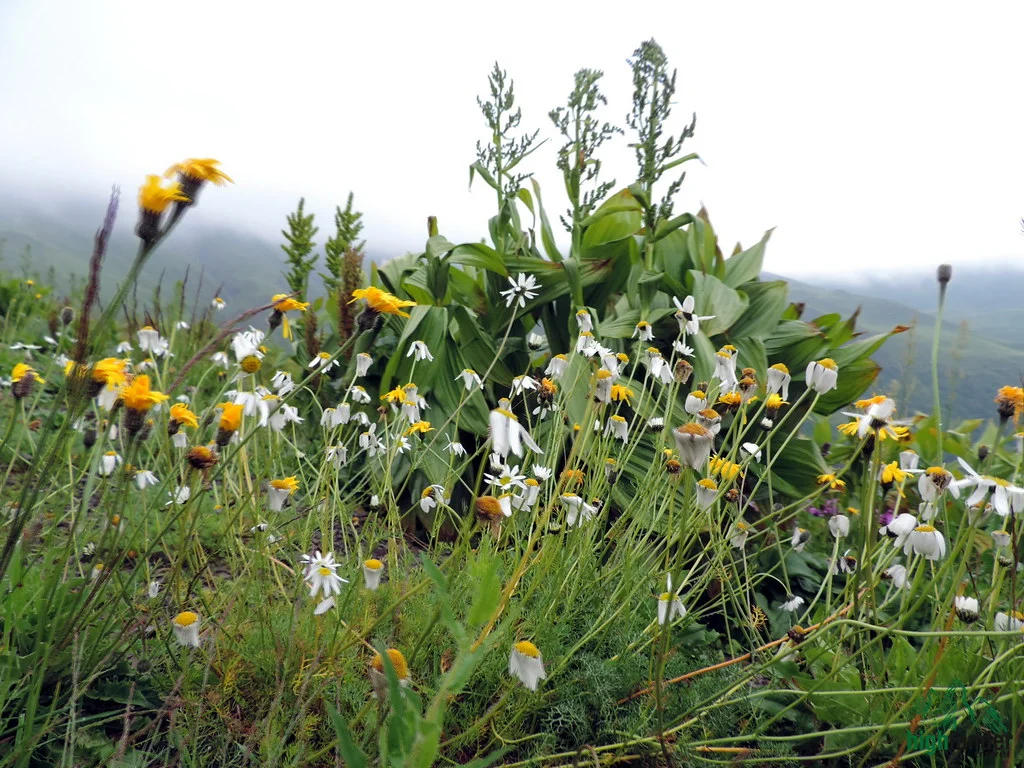
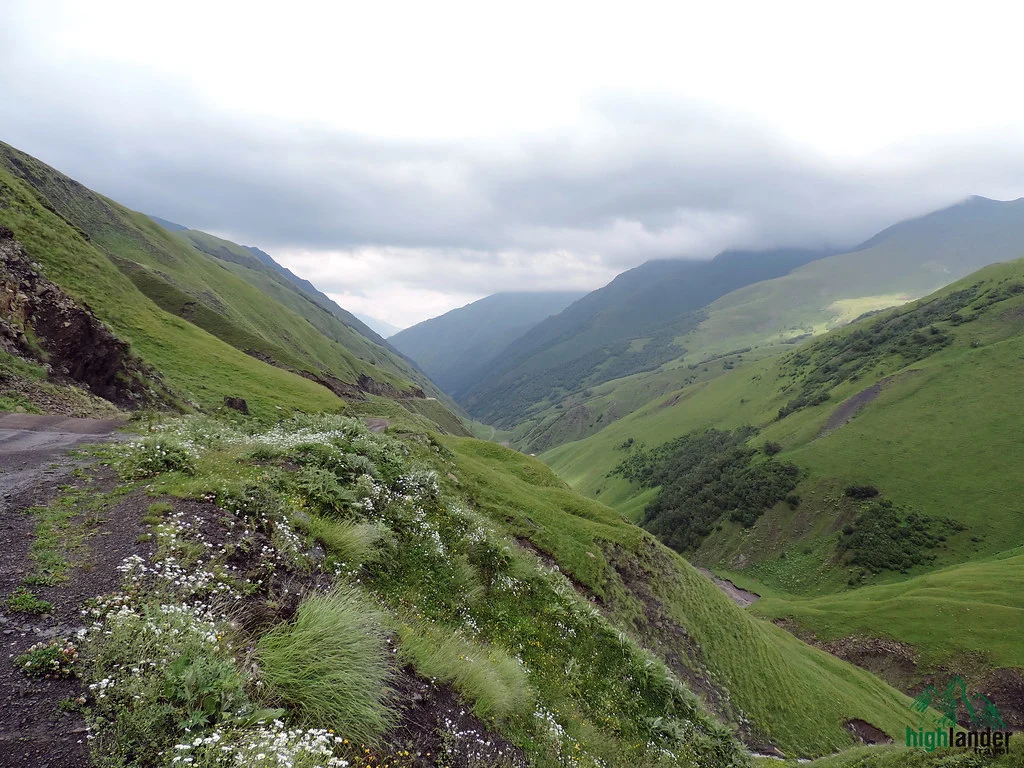
The big day. Start early, walk out of Juta on a clear trail through meadow, and climb steadily with the Chaukhi towers on your left getting more improbable the closer you get.
The Abudelauri lakes sit in a glacial bowl below the pass. There are three: the white one is milky with rock flour off the glacier, the blue one is clear enough to see the bottom, and the green one takes its colour from the minerals in the bed. They are within walking distance of each other and everybody spends longer there than the schedule allows.
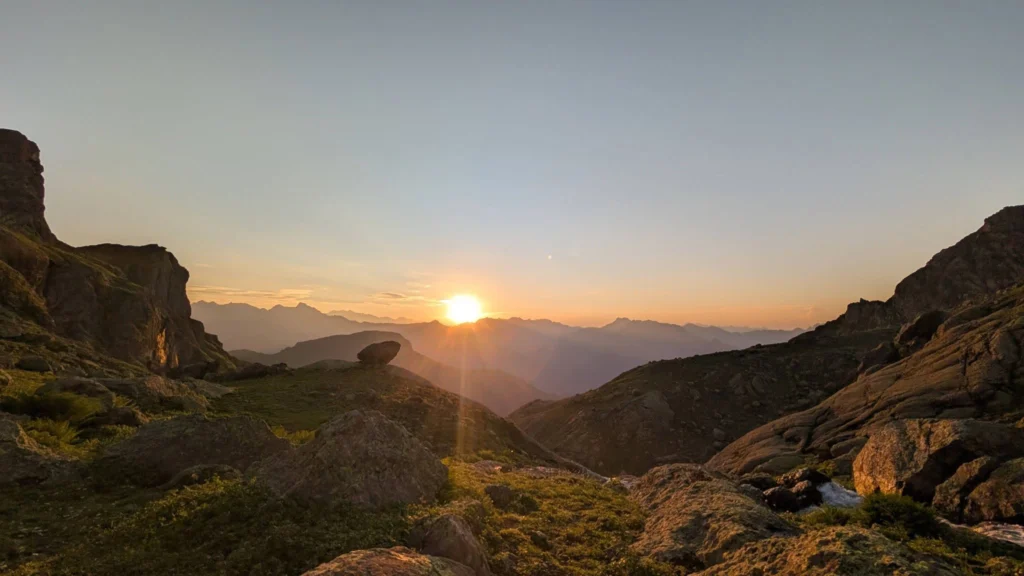
From the lakes the trail climbs to Chaukhi Pass at 3,338 metres — the high point of the tour. Behind you the towers, ahead the Khevsureti highlands running away in ridges. It is a place to stop for a while, and the altitude will make you want to.
The descent to Roshka is fourteen hundred metres and it is steep in places; trekking poles earn their weight here. At Roshka the vehicle is waiting, and we drive on into Khevsureti proper — over the Datvijvari Pass and down to Shatili.
It takes a moment to work out what you are looking at, because Shatili does not read as a village. It reads as one enormous stone building that grew roofs: around sixty towers built into and onto each other on a spur above the Argun, so you could cross the whole settlement without stepping outside. People lived in it until the 1960s. Tonight you sleep in it.
Be honest with yourself about this day. It is 23 kilometres, more than a thousand metres of climbing, altitude, and a mountain drive at the end of it. It is entirely doable if you walk regularly. It is miserable if you do not.
Day 3 · Shatili — Mutso — horse riding in Khevsureti
About 2 km on foot in Shatili · 1 hour up to Mutso and back · 15–18 km on horseback, 3–4 hours in the saddle · about 80 km driving · full board · guesthouse near Barisakho
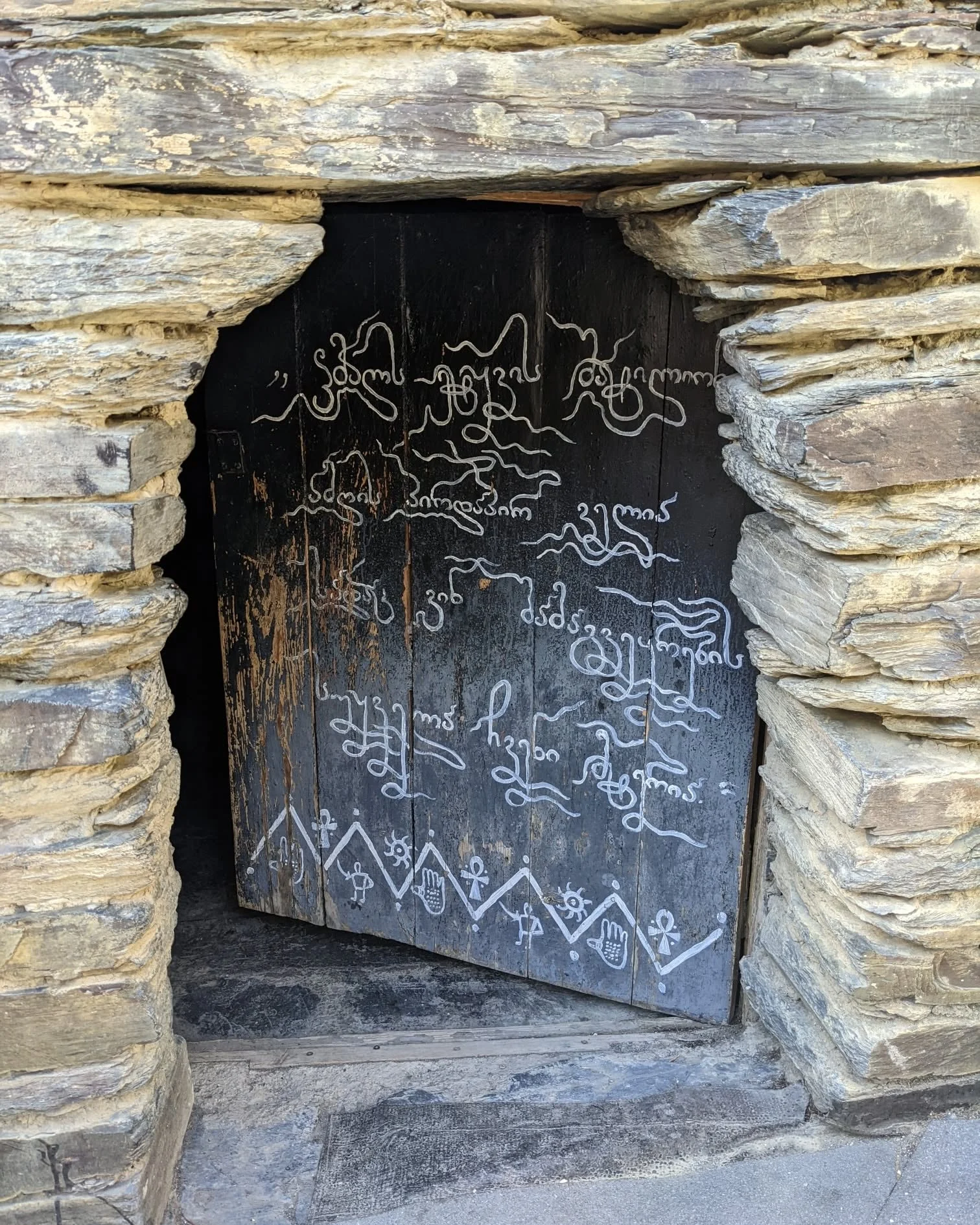
A morning in Shatili first — up the cut staircases, along passages a shoulder wide, out onto the roofs. The Khevsurs who built this kept their own courts and their own oaths into the twentieth century, and the architecture is the argument for why: every doorway here was designed by somebody expecting trouble.
Then a short rough drive up the gorge to Mutso. It is an hour’s climb from the road and worth every minute — a fortress stacked in tiers up a cliff above the Argun, towers braced against each other, burial vaults below the walls, and the river below that marking the border. Its people left in the Soviet period and it has been let alone since.
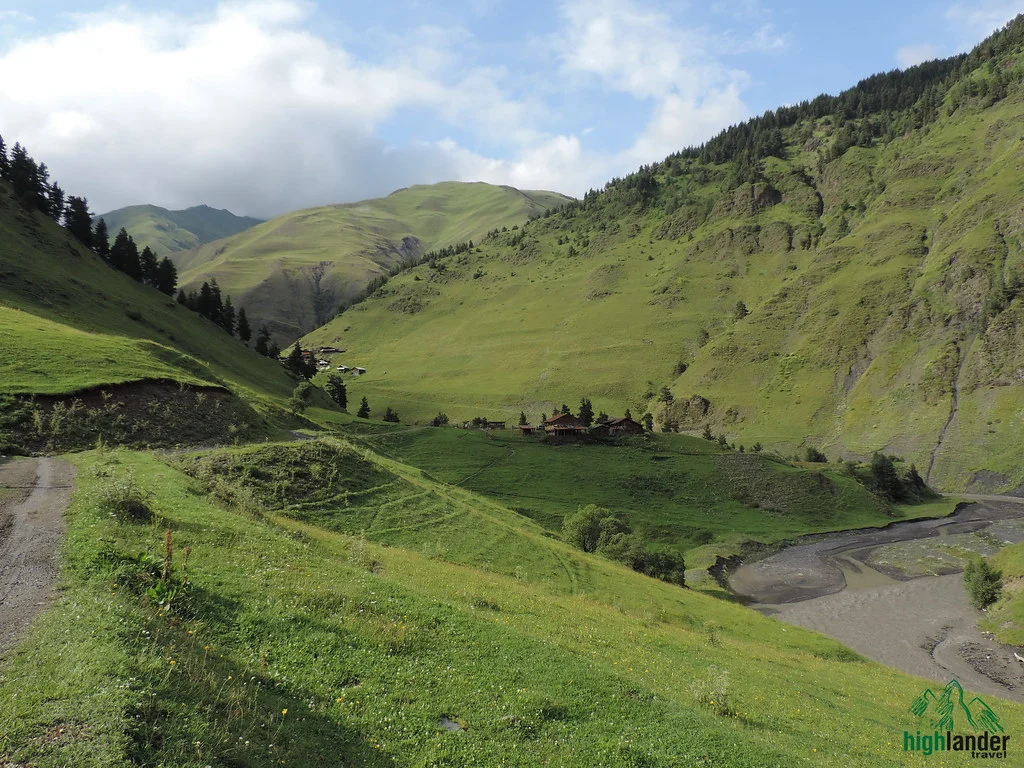
The afternoon is on horseback. Georgian mountain horses are small, sure-footed and entirely used to this ground, the pace is a walk, and a local horseman leads. You do not need to have ridden before — you will get the basics before you mount. Three or four hours through highland valleys, past summer shepherd camps, on tracks that no vehicle uses.
We drive on to a guesthouse near Barisakho in the evening.
Note on this day: the previous version of this itinerary offered 35 km of riding as well as Shatili and Mutso. It did not fit in a day and we have said so. The ride is now a realistic half day. If you would rather have the long ride, tell us and we will drop Mutso and give you the full 35 kilometres instead.
Day 4 · Rafting the Aragvi — back to Tbilisi
About 50 minutes on the water, Class II–III · about 60 km driving · breakfast · in Tbilisi by afternoon
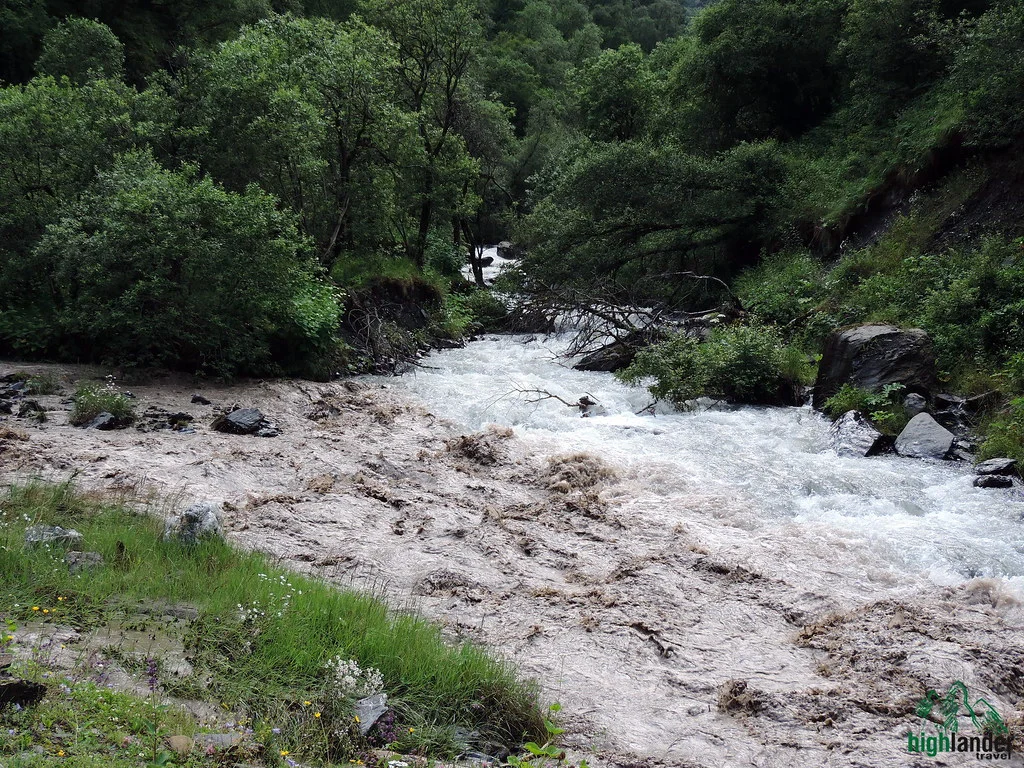
Down to the Aragvi, which runs on snowmelt off the range you have spent three days in. Fifty minutes on the water through Class II–III rapids — quick enough to be worth doing, gentle enough that nobody needs to have done it before. Helmets, jackets and wetsuits are provided and a professional guide steers.
The river cuts through wooded gorge with the mountains standing up on both sides, which is a good last view of the country you have been crossing on foot and on horseback all week.
Dry off, change, and drive back to Tbilisi, arriving in the afternoon.
If the water is low, which happens in a dry August, rafting may not run. We will tell you in advance if it looks unlikely and we swap in an alternative — usually a walk or an extra site on the way back — rather than cancelling the day.
Starting from
€890
per person
Locally operated since 2011
We reply within 24 hours
What your price covers
What’s included
Included
- All transport from and to Tbilisi, including 4×4 vehicles for the mountain roads
- Licensed English-speaking guide for all four days
- 4×4 shuttle up to Gergeti Trinity Church
- Three nights’ guesthouse accommodation — Juta, Shatili and the Barisakho area
- All meals: three breakfasts, three lunches, three dinners
- Horse riding with local horses, a horseman and all equipment
- Rafting on the Aragvi with professional guides, helmets, life jackets and wetsuits
- Entrance fees to all sites on the itinerary
- First aid kit carried by the guide
Not included
- International flights
- Travel insurance — required. It must cover hiking above 3,000 metres, horse riding and whitewater rafting; standard holiday policies routinely exclude all three
- Personal hiking gear — boots, waterproofs, poles, headlamp
- Alcoholic drinks
- Personal expenses
- Tips for the guide, driver, horseman and guesthouse hosts
Photographs
Gallery
Where you’ll go
Map & route
Practical details
Good to know before you go
Fitness — the honest version
Three of these four days are easy. The second is not. Day 2 is 23 kilometres, roughly 1,138 metres of ascent to a pass at 3,338 m and 1,388 metres of descent afterwards, over eight to ten hours on uneven mountain trail. You should be able to walk six to eight hours on consecutive days and be steady on steep loose ground going down. The horse riding on Day 3 needs no experience but does need three or four hours of tolerance for a saddle, and the rafting needs nothing at all.
If Day 2 sounds like more than you want, say so — we run shorter tours in the same country and would rather send you on the right one.
When to come
| Month | What you get |
|---|---|
| Late June – July | Best river levels for the rafting, meadows in flower, long days. Snow can still lie on the pass early in a heavy year |
| August | Warmest and most settled. Peak season, and the busiest the trail gets |
| September | Quieter, autumn colour beginning, stable weather and distinctly colder nights |
Where you sleep
| Night | Where | What it is |
|---|---|---|
| 1 | Juta, 2,200 m | Family guesthouse under the Chaukhi towers. Shared bathroom, hot water usually |
| 2 | Shatili | A guesthouse inside the fortress village itself |
| 3 | Barisakho area | Family guesthouse, lower and warmer |
All three are family-run. Expect shared bathrooms, variable hot water and better cooking than the description suggests.
What to bring
Essential: broken-in hiking boots, waterproof jacket, warm layer for the pass and for Juta at night, sun protection — there is no shade above the treeline — a daypack, headlamp, and capacity for at least 1.5 litres of water.
For the riding: long trousers and closed shoes. Your hiking boots are fine.
For the rafting: swimwear to go under the wetsuit, a towel and dry clothes for afterwards. Everything else is provided.
Strongly recommended: trekking poles for the 1,388-metre descent on Day 2. Your knees will thank you somewhere around Roshka.
Insurance
Cover for trekking above 3,000 metres, for horse riding and for whitewater rafting is a condition of joining this tour, and we ask to see it. Most standard travel policies exclude at least one of the three — read the exclusions rather than the summary page.
Group size and departures
Private departures, your group only. Minimum two people; smaller groups are quoted individually because the guide, the vehicle and the driver cost the same whether two people travel or six.
Want something shorter?
Two tours cover parts of this ground with less commitment: the Chaukhi Pass day hike if the trek is what you want, and the 2-day Khevsureti tour if it is Shatili and Mutso. And if Day 2 sounds too easy rather than too hard, the 7-day Atsunta Pass trek crosses from Khevsureti into Tusheti on foot.
From our travellers
Reviews
Before you book
Frequently asked questions
How difficult is the Chaukhi trek?
Day 2 is the hard part of this tour and the rest is not close: 23 kilometres, eight to ten hours, climbing about 1,138 metres from Juta to the pass at 3,338 m and then descending 1,388 metres to Roshka. The trail is clear but steep in sections and there is no way off it once you are over the top. If you hike six hours or more in mountains fairly regularly, you will be fine. If you don’t, this is the day to be honest about.
Are the Caucasus mountains safe to visit?
With a guide, yes. What we would not recommend is wandering alone in the uninhabited gorges — the weather turns fast, there is wildlife, and there is no signal. Roads up here can close for a day after rockfall or a landslide, and our guides watch conditions and change the plan when they need to. This tour has run for years without incident.
Do I need horse riding experience?
No. The horses are calm mountain breeds who have done this route more often than any of us, the pace is a walk rather than anything faster, and a local horseman leads. You get the basics before you get on. It helps to be reasonably fit and not nervous around large animals — several hours in a saddle uses muscles you had forgotten about.
Is the rafting dangerous?
The Aragvi runs Class II–III — quick, splashy, not extreme. Everyone wears a helmet and a life jacket and a professional guide steers the raft. You do not need to swim or to have rafted before. Minimum age 12.
What if the rafting can’t run?
In a dry summer the water can drop too low. If that happens we swap in something else — a walk, an extra site on the drive back — and we will tell you beforehand if conditions look unlikely rather than leaving it to the morning.
What about the altitude?
The highest point is the Chaukhi Pass at 3,338 m, below the level where serious altitude problems usually start. You will still be short of breath on the climb, and a headache or a bad night’s sleep in Juta is normal. We go up gradually. Drink more than you think you need and tell your guide how you are feeling rather than pushing on quietly.
Can children come?
From 12, if they are fit and comfortable with both walking and horses — and 12 is the minimum age for the rafting anyway. Day 2 is demanding for adults, so be realistic about a child’s stamina rather than optimistic. Talk to us about family bookings and we will tell you honestly whether it works.
What if the weather turns?
Mountain weather does what it likes. We may start earlier, change the route, or in bad conditions postpone or modify the Chaukhi crossing — that call belongs to the guide and it is final. There is always a fallback plan; build a spare day into your travel if you can.
What is the food like?
Very good, and there is a lot of it. Guesthouse cooking: khachapuri, khinkali, grilled meat, salads, home-made bread, whatever is in the garden. Vegetarian is straightforward with notice. You will need the calories after Day 2.
When is the best time to do this tour?
Late June to September. Late June and July give the best water for the rafting and the alpine meadows in flower; August is the most settled weather and the warmest; September is quieter with autumn colour starting and colder nights. Snow can lie on the Chaukhi Pass into early July after a heavy winter.
Ready when you are
Tell us your dates and how many of you are travelling. We’ll come back within 24 hours with availability, a confirmed price, and your guide’s name.