
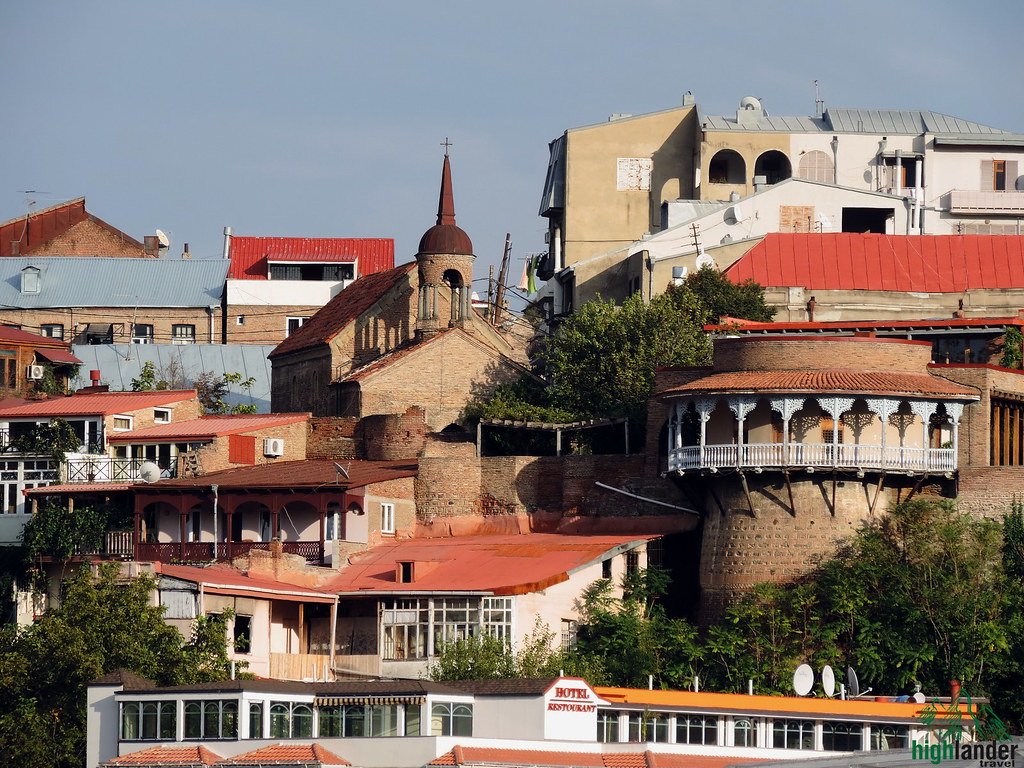
The first thing you notice in Tbilisi is the smell. Not a bad one — just specific. Sulfur from the hot springs drifting up through the Old Town, mixing with woodsmoke from a bakery pulling bread out of a round clay oven. Then coffee. Then car exhaust. Then something floral from a courtyard you can’t see. A dozen things that shouldn’t work together, but do.
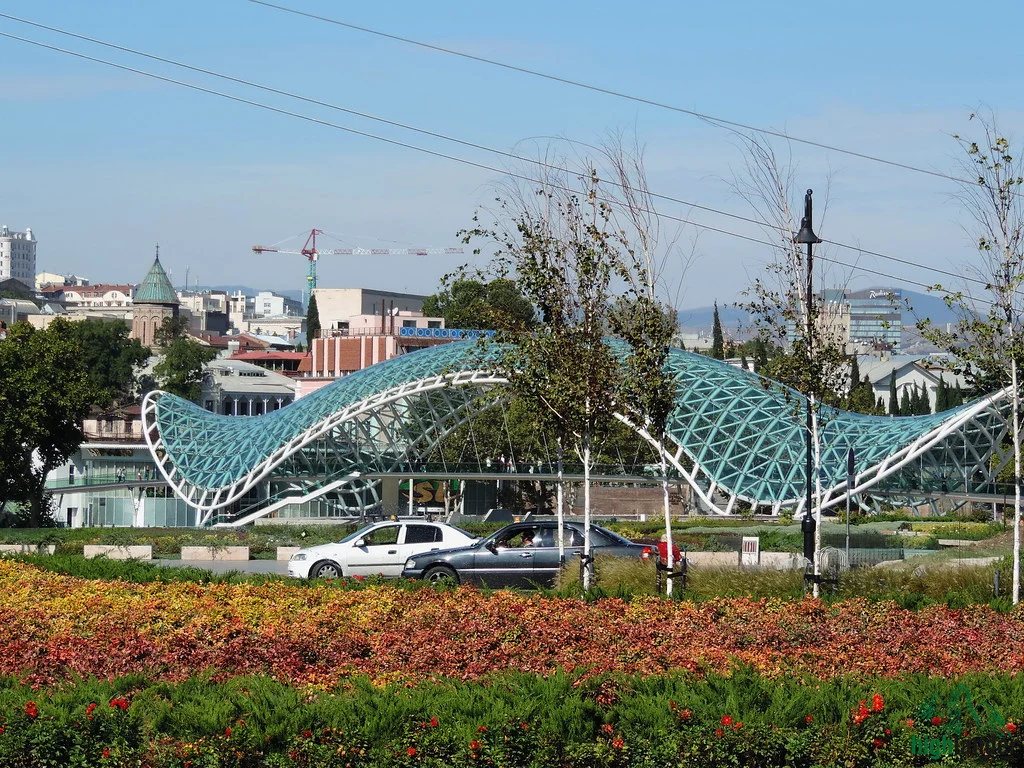
That’s Tbilisi in a sentence. A city that shouldn’t work but somehow does. Persian bathhouses next to Soviet apartment blocks next to medieval fortresses next to glass-and-steel bridges. It was destroyed so many times — by Persians, Arabs, Mongols, Ottomans, Russians — that at some point it stopped worrying about architectural coherence and just said yes to everything. The result is wild, contradictory, and strangely beautiful.
Most travelers use Tbilisi as a layover on the way to the mountains. That’s a mistake. Georgia’s capital is not a transit point. It’s a destination.
01
THE NAME
Is It Tbilisi or Tiflis?
Both names refer to the same city. The name comes from the Georgian word tbili, meaning “warm” — a nod to the hot sulfur springs that have been flowing here since before the city was founded. In Old Georgian, the pronunciation was Tphilisi. Turkish speakers simplified it to Tiflis, and that version traveled through Russia and the Ottoman Empire into European languages.
In 1936, the official name was realigned with the Georgian pronunciation: Tbilisi. International usage has mostly followed. German speakers still commonly use Tiflis, the Swiss prefer Tbilissi, and English-language media has largely switched to Tbilisi. All of them are correct. Use whichever feels natural.
02
THE FOUNDING LEGEND
The Founding Legend: A Falcon, a Pheasant, and a Hot Spring
The founding of Tbilisi is attributed to King Vakhtang Gorgasali, who ruled in the late 5th century. The legend goes like this:
Vakhtang was hunting with his favorite falcon near the Mtkvari River. The falcon struck a pheasant, but the wounded bird escaped and fell into a hot sulfur spring. The falcon followed — neither survived. When the king’s men found the spring, Vakhtang was so taken with it that he ordered a city built on the spot. He named it Tbilisi — the warm city.
Fifteen centuries later, Tbilisi is still Georgia’s capital. And the hot springs that Vakhtang found? They’re still flowing under the Old Town. You can still bathe in them.
03
WHY GO
Why Tbilisi Deserves Your Time
The Old Town isn’t a museum — it’s alive
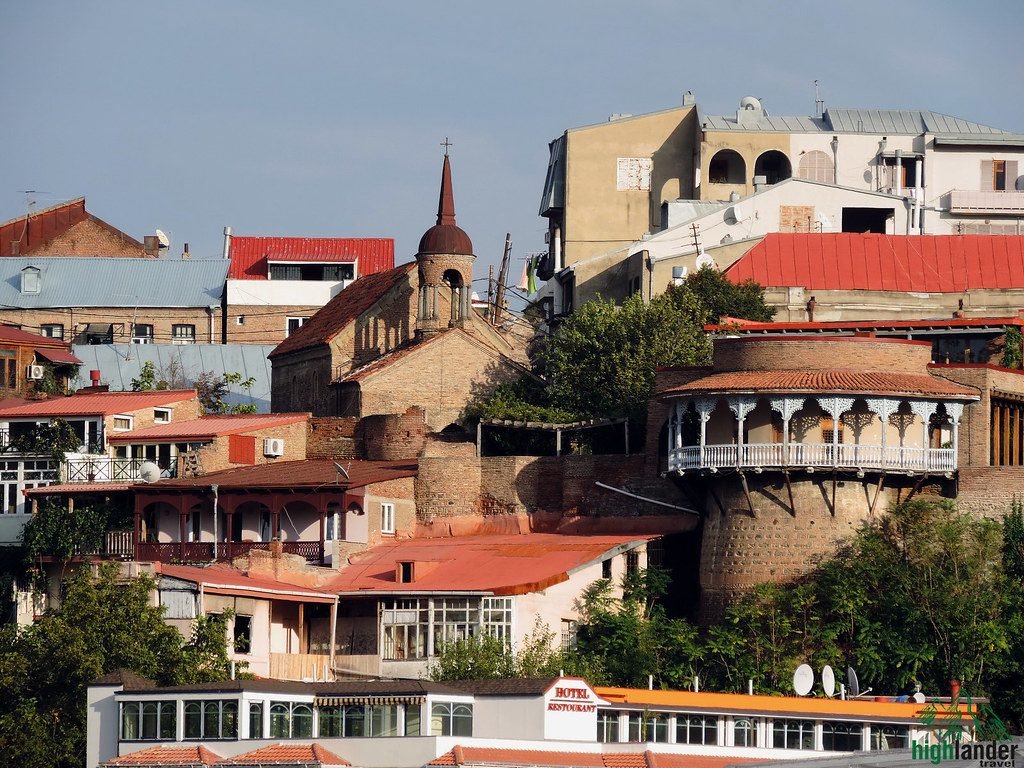
Tbilisi’s Old Town (Dzveli Kalaki) wasn’t reconstructed for tourists. Wooden balconies hang at improbable angles over cobblestone lanes. Grapevines climb crumbling walls. Stray cats sprawl in doorways. You get lost, and that’s the point. Turn a corner and you’re looking at a 6th-century church. Turn another and you’re in someone’s courtyard, with laundry on the line and a dog that doesn’t care about you at all.
The sulfur baths are the reason the city exists
The Abanotubani district — literally “bath quarter” — sits where everything started. Hot sulfur springs feed Persian-style bathhouses with their distinctive red-brick domes. A visit involves steaming tiled rooms, a vigorous scrub with a rough mitt, and a bucket of cold water over the head to finish. It’s not luxury spa — it’s ritual, and it’s been going on here for centuries.
The food scene punches above its weight
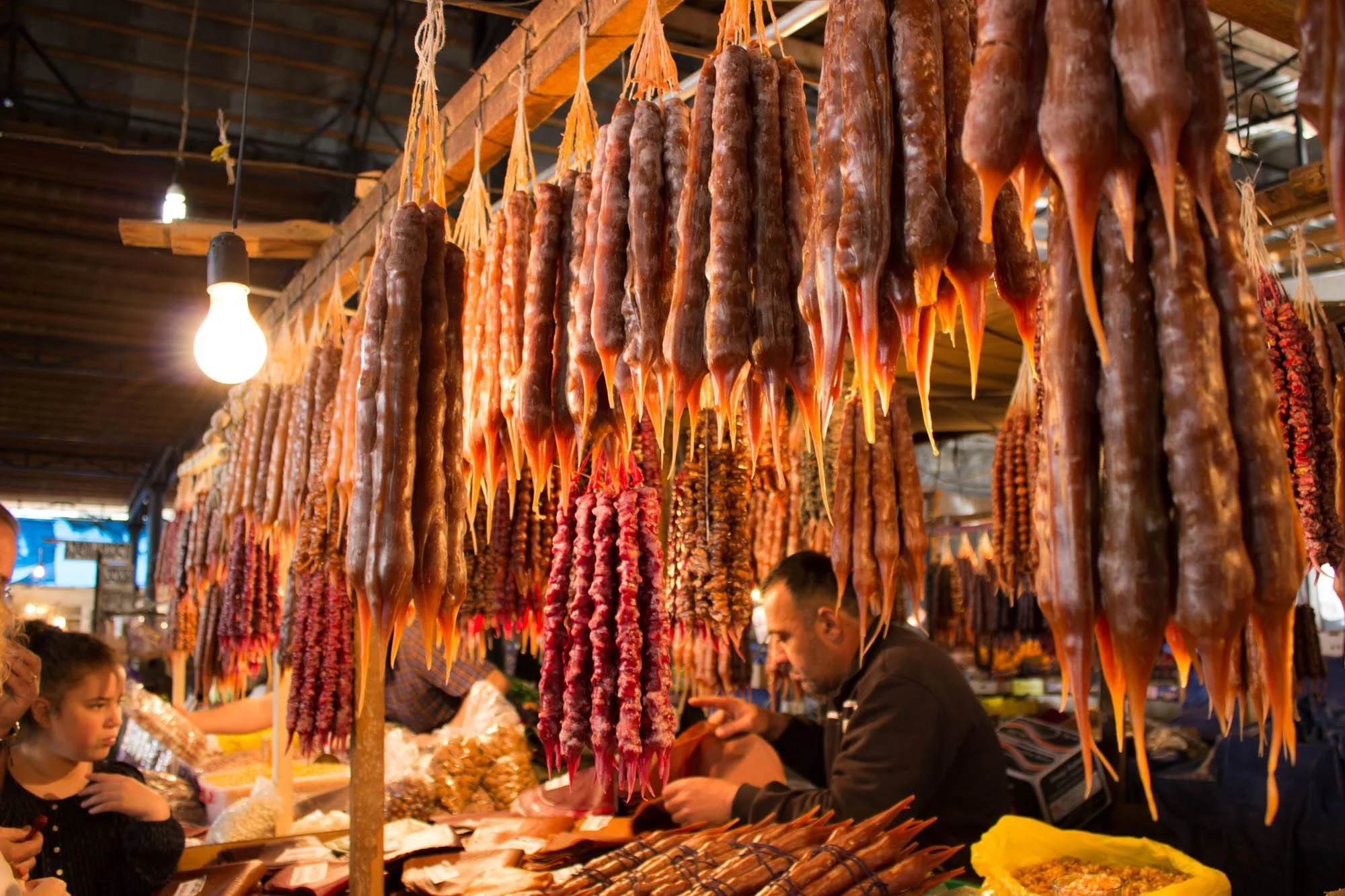
Georgian cuisine doesn’t get the international attention it deserves, and Tbilisi is where you discover why that’s going to change. Khinkali — pleated soup dumplings you eat by the dough knot, tilting the sack to drink the broth first, never cutting with a knife. Khachapuri — cheese bread in a dozen regional variations, the Adjarian version arriving like a molten cheese boat with a raw egg and melting butter on top. Pkhali — herb-and-walnut pastes in jewel-tone colors. Churchkhela — grape-juice-and-walnut bars that look like candles and taste like nothing you’ve had before.
A full meal with wine in a good restaurant: $15. In a dukani (a no-frills cafeteria where you point at dishes behind glass): $5. This is not a city where eating well requires money. It requires appetite.
The wine is 8,000 years old — and it’s everywhere
Georgia makes a credible claim to being the birthplace of wine. Archaeological evidence stretches back eight millennia. In Tbilisi, that tradition is condensed into wine bars, cellars, museums, and specialty shops on nearly every block in the Old Town and Vera neighborhood. Natural wine enthusiasts discovered Georgian qvevri wines years ago, and the city has dozens of bars pouring small-production, organic wines fermented in traditional clay vessels. If you’re curious about Georgian grape varieties, we cover them in a separate guide.
The nightlife catches you off guard
Tbilisi’s techno scene has earned international recognition. Bassiani — built in a former swimming pool beneath a sports stadium — draws DJs from across Europe and stays open until Monday morning. But the nightlife isn’t just about clubs. There are jazz cellars, bars with live traditional polyphonic singing, rooftop terraces overlooking the river, and tiny basement spots where locals drink chacha (Georgian grape brandy) and argue about football until 4am.
The prices are genuinely low
| Expense | Approximate cost |
|---|---|
| Three-course meal with wine | $15–25 |
| Guesthouse room | $20–35/night |
| Metro ride | $0.35 |
| Coffee in a cafe | $1–1.50 |
| Sulfur bath session | $7–50 (depending on bathhouse) |
| Museum entry | $1.50–5 |
| Taxi across the city (app) | $1.50–3 |
04
WHERE TO STAY
The Neighborhoods: Where to Stay and Why It Matters
Tbilisi is hilly and sprawling. Each neighborhood has a distinct personality — your choice of where to stay shapes which city you experience.
HISTORIC
Old Town (Dzveli Kalaki) — the postcard version
Cobblestones, leaning balconies, sulfur bath steam rising from the valley, Narikala Fortress watching from above. This is where the major churches sit, where Abanotubani steams, where the Shardeni pedestrian street fills with diners at night. In peak summer it gets crowded with tour groups — early mornings and late evenings are when it shows its real face.
Stay here if: You want to be at the center of everything and don’t mind tourists.
ATMOSPHERIC
Sololaki — faded aristocratic elegance
Just above the Old Town. Tree-lined streets, Art Nouveau buildings, hidden courtyards, the slightly worn grandeur of the old merchant class. The funicular to Mtatsminda starts here.
Stay here if: You want Old Town proximity without the noise, and love crumbling beautiful architecture.
LOCAL
Vera — where the locals actually go
This is young Tbilisi. Wine bars that serve Georgians, not tourists (Ghvino Underground, Vinoground). Independent cafes, galleries, experimental restaurants. Less polished, more real.
Stay here if: You’d rather drink wine in a basement bar than photograph a church.
CREATIVE
Marjanishvili / Agmashenebeli — the creative quarter
The wide Agmashenebeli Avenue has been carefully renovated in recent years. Restaurants, bars, and boutiques line the main street. Side streets still have Tbilisi’s signature atmosphere: peeling facades, courtyard chaos, vines growing over everything. The Fabrika hostel — a converted Soviet textile factory now housing coworking spaces, cafes, pop-ups, and a hostel — anchors the creative energy here.
Stay here if: You want local character, creative scene, and good food without the Old Town crowds.
CENTRAL
Rustaveli Avenue — the grand boulevard
The main drag, connecting Freedom Square to the Parliament building. Opera house, national theater, national museum. Impressive but not intimate.
Stay here if: Central location matters more than atmosphere.
COMFORTABLE
Vake — the affluent suburbs
Wide avenues, parks, modern apartments, malls. Where successful Tbilisians move when they can afford to. Safe, green, quiet — but it trades away the raw charm of the inner city.
Stay here if: You’re here long-term or prioritize comfort over character.
VIEWPOINT
Mtatsminda — the hill above it all
Tbilisi’s “Holy Mountain,” reachable by a historic funicular (built in 1905, renovated in 2012). At the top: an amusement park and panoramic views that are worth the ride at any time, but especially at sunset. Not a neighborhood to sleep in — a place to visit.
05
SIGHTS & CULTURE
What to See in Tbilisi
Churches and cathedrals
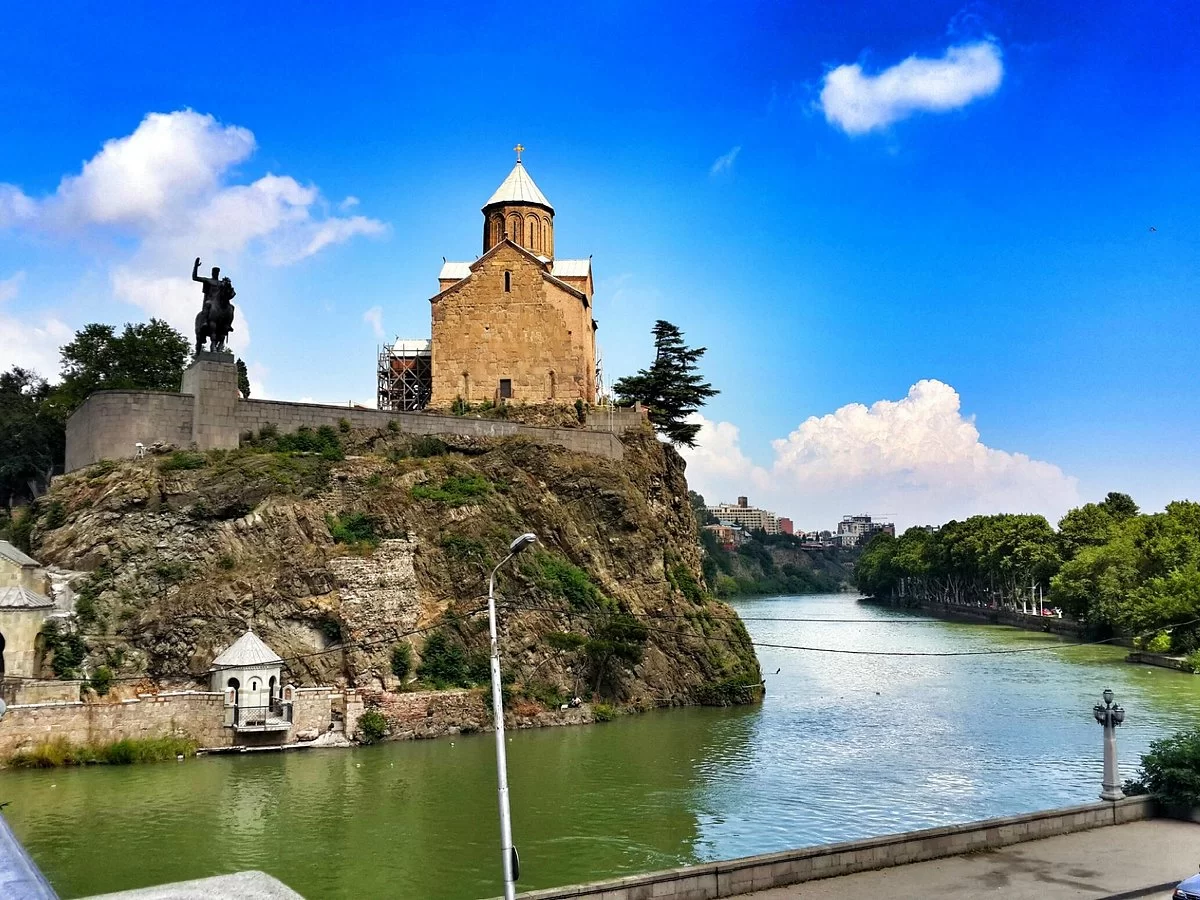
The Holy Trinity Cathedral (Sameba) sits on Elia Hill, its gold dome visible from almost everywhere in the city — the largest church in Georgia. In the Old Town, the Sioni Cathedral, the Anchiskhati Basilica (6th century, the oldest in Tbilisi), and the Metekhi Church on the river cliff — with the equestrian statue of King Vakhtang Gorgasali beside it — are all worth seeing.
Fortresses and historical sites
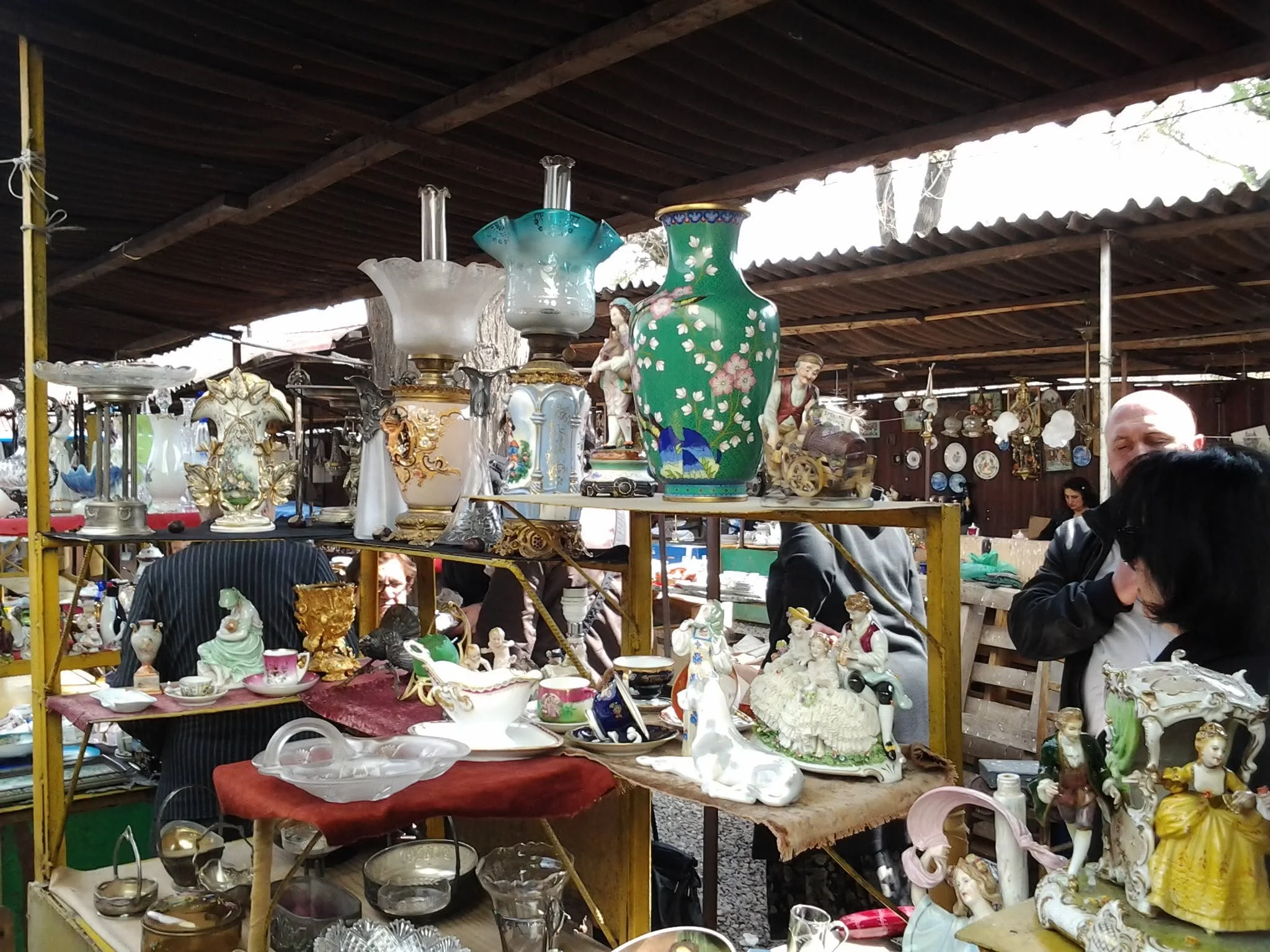
Narikala Fortress has watched over Tbilisi since the 4th century. Reach it on foot, by cable car from Rike Park, or through the Botanical Garden. The Dry Bridge flea market is an experience in itself — Soviet military pins, vinyl records, tarnished silver, oil paintings, carved drinking horns. It’s less a market than an open-air museum of Georgian 20th-century life, and the vendors are part of the show.
Museums
The Georgian National Museum houses one of the most important collections in the Caucasus, from Bronze Age goldwork to Soviet occupation history. The Treasury displays thousands of years of Georgian metalwork. For something smaller and stranger, try the Museum of Soviet Occupation or the quirky Tbilisi History Museum.
Parks and viewpoints
The Botanical Garden unfolds in a gorge behind Narikala Fortress — a waterfall, centuries-old trees, and sudden quiet in the middle of the city. Rike Park along the river is modern and manicured, the departure point for the Narikala cable car. Mtatsminda Park on the hilltop has the best panorama in the city.
Theater and culture
The Rustaveli and Marjanishvili theaters are among the best in the Caucasus. The Opera House is worth a visit for the Moorish-style architecture alone. And the Gabriadze Marionette Theater in the Old Town has earned a reputation far beyond Georgia — the small clock on its facade, which sends an angel out at every hour, is one of the most photographed details in the city.
06
OUR TOURS IN TBILISI
Check our tours in Tbilisi
07
LOCAL FOOD
Eating in Tbilisi: A Crash Course
Georgian food is one of those cuisines that, once you’ve had it, makes you wonder how you went this long without it. The flavors are bold — heavy on walnuts, fresh herbs, garlic, pomegranate, and cheese — but the dishes are built around balance, not heat. Here’s what to eat and how to eat it.
Khinkali
These pleated dumplings come stuffed with spiced meat, cheese, mushrooms, or potato. The rules: hold it by the top knot (the thick dough handle), bite a small hole, drink the broth, then eat the rest. Never use a fork. Never eat the knot (leave it on your plate — that’s how the waiter counts your order). A plate of ten runs about $3 in a basic place.
Khachapuri
Cheese-filled bread that comes in several regional styles. The Imeretian version is a simple round cheese pie. The Adjarian version arrives shaped like a boat, filled with bubbling cheese, with a raw egg and a knob of butter melting on top. You tear off the bread edges, stir the egg in, and scoop. It’s breakfast, lunch, dinner, and a hangover cure.
Pkhali
Finely chopped vegetables or herbs (spinach, beet, cabbage) mixed with ground walnuts, garlic, and spices, formed into small balls. Served cold as a starter. Looks like nothing special, tastes extraordinary.
Churchkhela
Walnuts or hazelnuts threaded on a string, dipped repeatedly in thickened grape juice, and dried into chewy bars that look like candles. Buy them fresh at the Deserter’s Bazaar or any market — the texture is completely different from the dried-out versions sold as tourist souvenirs.
08
PLAN YOUR STAY
Practical Information
Getting there
Tbilisi International Airport is 18 km from center. Direct flights from several European cities, plus connections through Istanbul, Dubai, and other hubs.
| Transport | Cost | Time | Notes |
|---|---|---|---|
| Bus 37 | 1 lari (~$0.35) | ~45 min | Runs 6am–midnight |
| Taxi app (Bolt/Yandex) | 25–35 lari ($8–12) | 20–30 min | Download before landing |
| Airport taxi stand | 30–40 lari ($10–13) | 20–30 min | Often overpriced — negotiate |
| Hotel transfer | ~$15–20 | 20–30 min | Book in advance |
Getting around
The metro has two lines, runs from 6am to midnight, and costs 1 lari per ride. You need a rechargeable Metromoney card (2 lari deposit, works on buses too). The Soviet-era stations are architecturally interesting. Announcements are in Georgian and English.
Walking is the best way to explore the Old Town — but Tbilisi is hilly. Good shoes are not optional. For longer distances, order a taxi through Bolt or Yandex. Most rides within the city cost $1–3. The drivers won’t always know where they’re going. That’s normal.
From the Didube bus station, marshrutkas (minibuses) leave for everywhere in Georgia — Mtskheta (30 min, 1 lari), Kazbegi/Stepantsminda (3–4 hours, 10–15 lari), Batumi (5–6 hours, 20–25 lari). They leave when full, not on a schedule. Welcome to Georgia.
Best time to visit
| Season | Temperature | Verdict |
|---|---|---|
| Spring (March–May) | 12–25°C | Excellent — blossoming trees, Easter celebrations, warm without being hot |
| Summer (June–Aug) | 25–38°C | June is fine. July/August: skip it. Oppressive heat, empty city, many places closed |
| Autumn (Sept–Nov) | 15–28°C | Best months. September/October are ideal — harvest season, festivals, golden light |
| Winter (Dec–Feb) | 0–10°C | Cold, rarely snowy. Few tourists, low prices. Orthodox Christmas on January 7 |
For more detail, see our guides on when to visit Georgia and the rare event of snow in Tbilisi.
Budget overview
| Travel style | Daily budget | Accommodation | Food |
|---|---|---|---|
| Budget | $30–45 | Hostel / simple guesthouse ($15–20) | Cafeterias + basic restaurants ($10–15) |
| Mid-range | $50–80 | Boutique hotel / good guesthouse ($35–45) | Restaurants + wine bars ($20–30) |
| Comfort | $100+ | Upscale hotel ($60–100) | Fine dining, wine tastings ($40–60) |
09
BLOG
Read the blog about Tbilisi

START PLANNING
See Tbilisi with someone who knows it
Tell us your dates, interests, group size and pace. We will create a private itinerary for you.


