
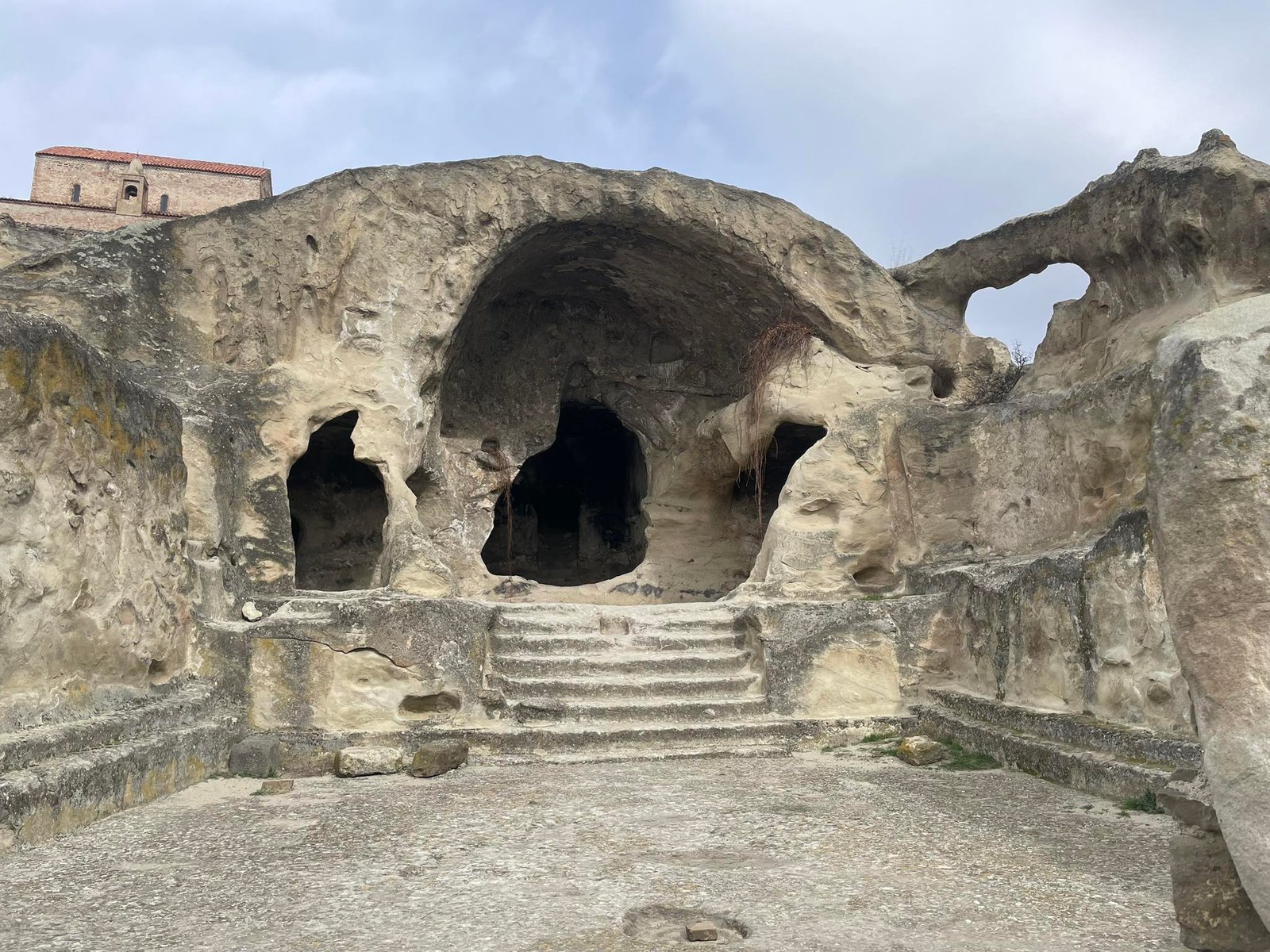
Georgia’s heartland — where a 3,000-year-old cave city overlooks the river, Stalin’s birthplace sits in the shadow of a medieval fortress, and a quiet valley produces wine that never leaves the country.
Shida Kartli — “Inner Kartli” — is the region that gave Georgia its name. This is Kartli, the historical core, the territory where the ancient Kingdom of Iberia had its capital, where Christianity arrived in the 4th century, and where the main east-west highway still runs today, just as it did when Silk Road caravans passed through.
The region stretches across the broad Mtkvari river valley, flanked by the Greater Caucasus to the north and the forested Trialeti Range to the south. Its administrative center is Gori — a small city known to the world primarily as Stalin’s birthplace, though Georgians would rather you noticed the medieval fortress on the hill above it, or the Iron Age cave city carved into the cliffs just outside town.
Most travelers pass through Shida Kartli on the highway between Tbilisi and Kutaisi. That’s a mistake — or at least a missed opportunity. The region rewards a full day, or two, with some of Georgia’s most significant historical sites, its least-known wine valley, and a landscape of orchards, fields, and river gorges that feels distinctly different from either the mountains or the coast.
There’s also a more complicated dimension. The northern part of Shida Kartli includes the occupied territory of South Ossetia, controlled by Russia since the 2008 war. The occupation line runs through the region, and some villages are literally divided. This is not a security concern for tourists visiting Gori, Uplistsikhe, or the Ateni Valley — those areas are fully accessible and safe — but it adds a layer of political reality that few other Georgian regions carry so visibly.
01
WHY GO
Why Visit Shida Kartli?
Because this is where Georgia’s layers are deepest — and most accessible.
The archaeology is extraordinary
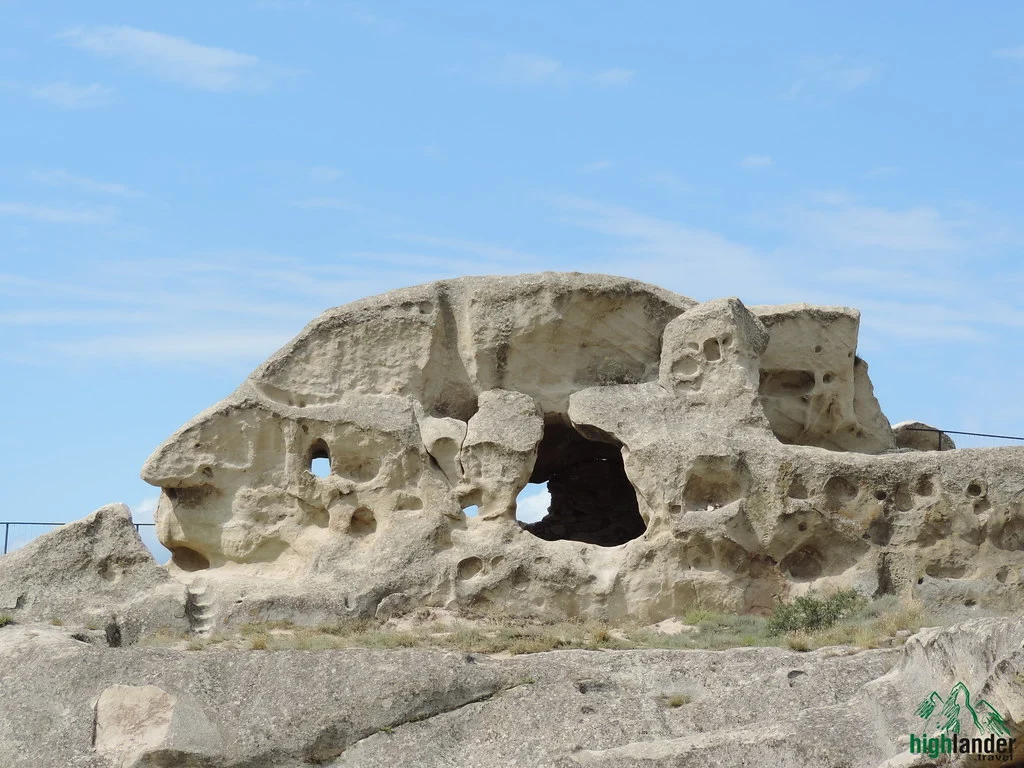
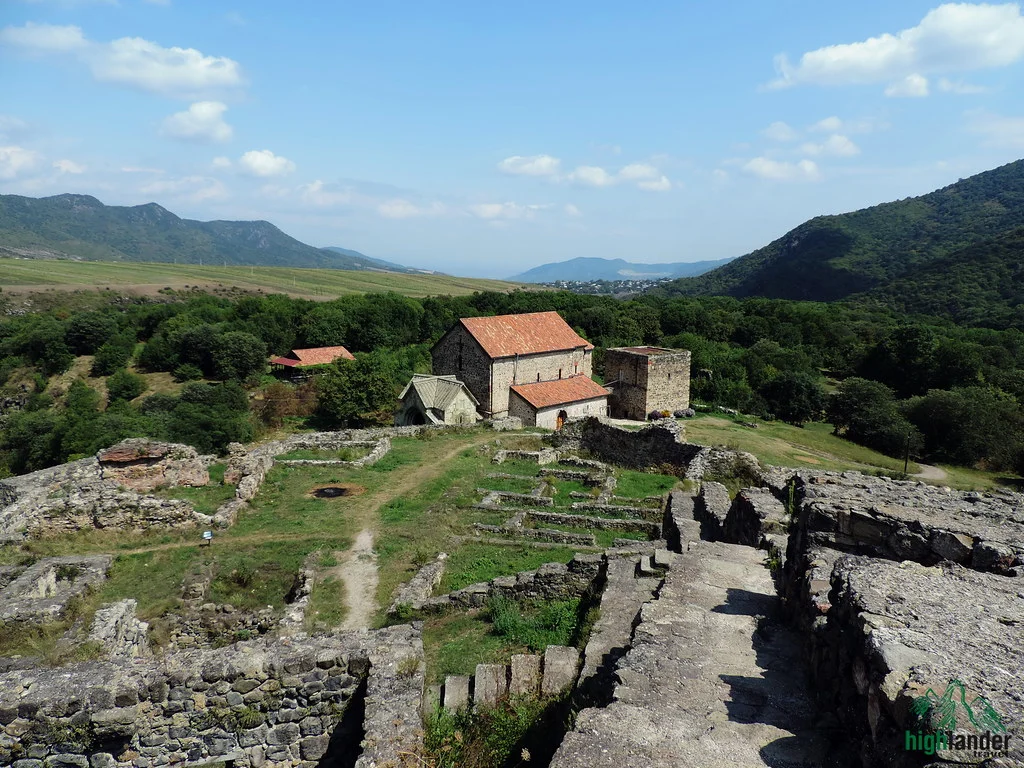
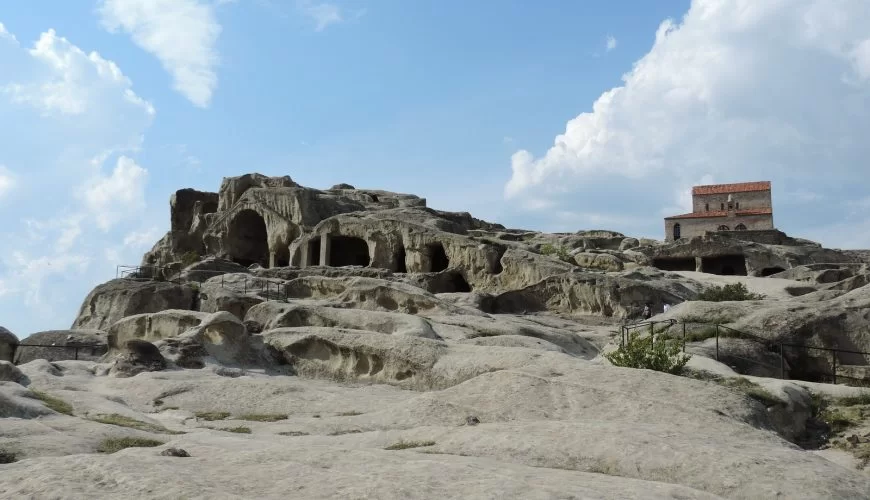
Uplistsikhe is one of Georgia’s most important archaeological sites. Carved into a sandstone ridge above the Mtkvari River starting around the 6th century BC, this cave city contains temples, a theater, a pharmacy, wine presses, and residential quarters — all cut directly into living rock. It was a pagan spiritual center, then a Silk Road trading post, then a Christian settlement (there’s a 10th-century basilica still standing on top). Walking through it, you see 2,600 years of Georgian civilization compressed into one site.
The churches are some of Georgia’s finest
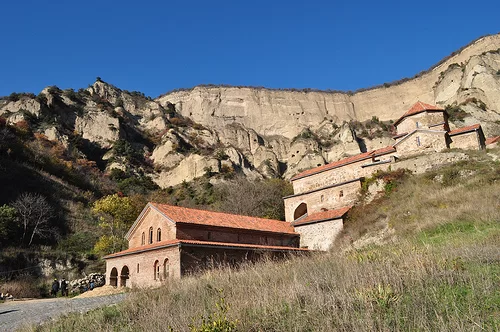
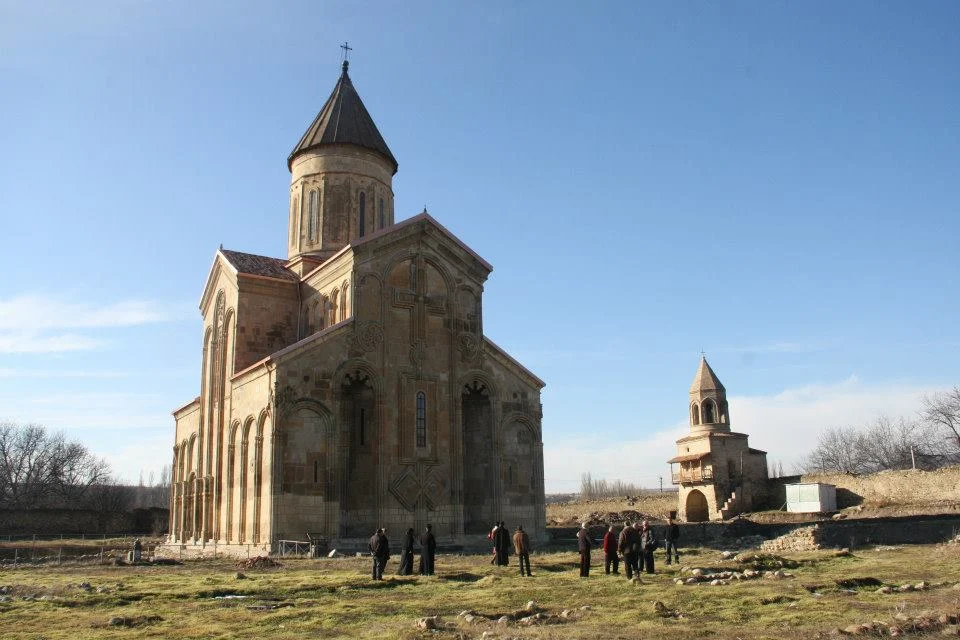
Shida Kartli sits on the historical highway between Mtskheta (Georgia’s ancient capital) and the western provinces. Kings, bishops, and wealthy patrons all built here. The result is a concentration of medieval churches — Ateni Sioni (7th century, with stunning 11th-century frescoes), Samtavisi (11th century, the template for an entire school of Georgian architecture), Kintsvisi (with 13th-century murals that rank among the greatest medieval paintings in the Caucasus) — that would be headline attractions in any other country.
The wine is rare and local
The Ateni Valley produces Atenuri, a light, naturally sparkling white wine made by a method unique to this gorge. It’s almost impossible to find outside Georgia, and difficult even in Tbilisi. Coming here to taste it where it’s made, in small family cellars where the qvevri are still buried in the floor, is one of the more genuine wine experiences Georgia offers.
It’s easy to reach
Gori is 80 km from Tbilisi — about an hour on the highway. Uplistsikhe is 10 km beyond that. The Ateni Valley is a short detour south from Gori. You can see the highlights in a long day trip from Tbilisi, or combine it with a night in Gori and a slower exploration of the valley churches.
The 20th-century history is unavoidable
Stalin was born in Gori in 1878. The Stalin Museum, built during the Soviet era and largely unrenovated since, is one of the strangest museum experiences in the Caucasus — part biography, part propaganda showcase, part unresolved reckoning with a legacy that killed millions. It’s not celebratory, exactly, but it’s not critical in the way a Western museum would be. Worth seeing precisely because of that ambiguity.
02
HISTORY & LANDSCAPE
What to See in Shida Kartli
From the Iron Age to the Hellenistic period
Uplistsikhe — Iron Age cave city carved into sandstone cliffs above the Mtkvari River. One of the oldest urban settlements in the Caucasus (6th century BC). You’ll see carved temples, a throne room, wine cellars, a pharmacy, and an amphitheater. The 10th-century three-nave basilica on top dates from the city’s final Christian phase. Allow 1.5–2 hours. Entrance: 15 GEL.
Grakliani Hill — Active archaeological excavation site between Kaspi and Gori. Finds span from the Bronze Age through the Hellenistic period, including what may be an early Georgian script predating the known alphabet. Not always open to visitors, but when it is, it’s fascinating.
Five remarkable medieval sites
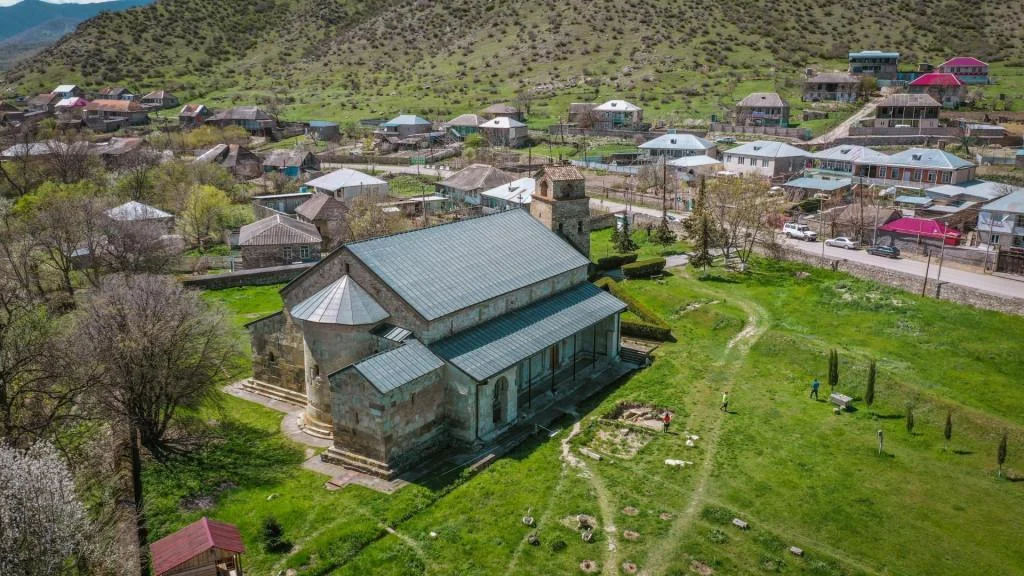
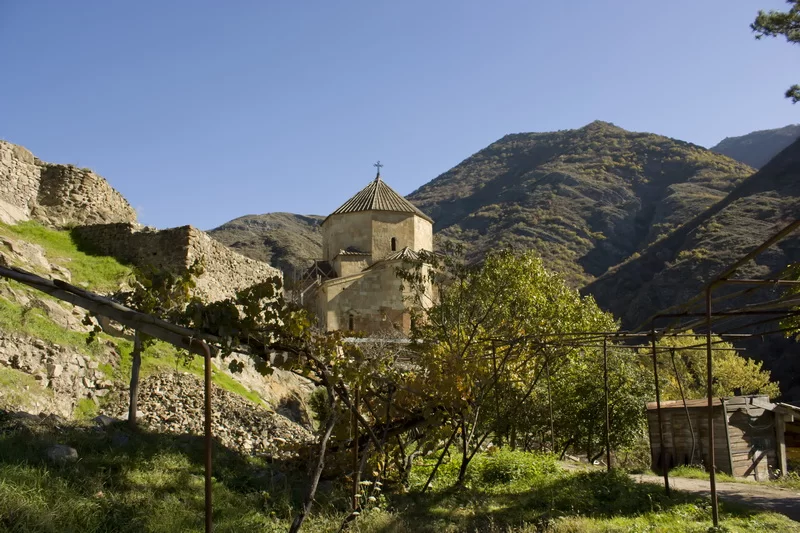
Ateni Sioni Church — 7th-century tetraconch church modeled on Mtskheta’s Jvari Monastery, standing on a reinforced rock above the Tana River. The 11th-century interior frescoes depicting the life of the Virgin Mary are among the finest medieval wall paintings in Georgia. The setting — vineyards, gorge, quiet — is half the experience.
Samtavisi Cathedral — Built in 1030, visible from the main highway. Its carved stone facade established an architectural pattern that influenced Georgian church building for centuries. The proportions and decorative stonework reward close attention.
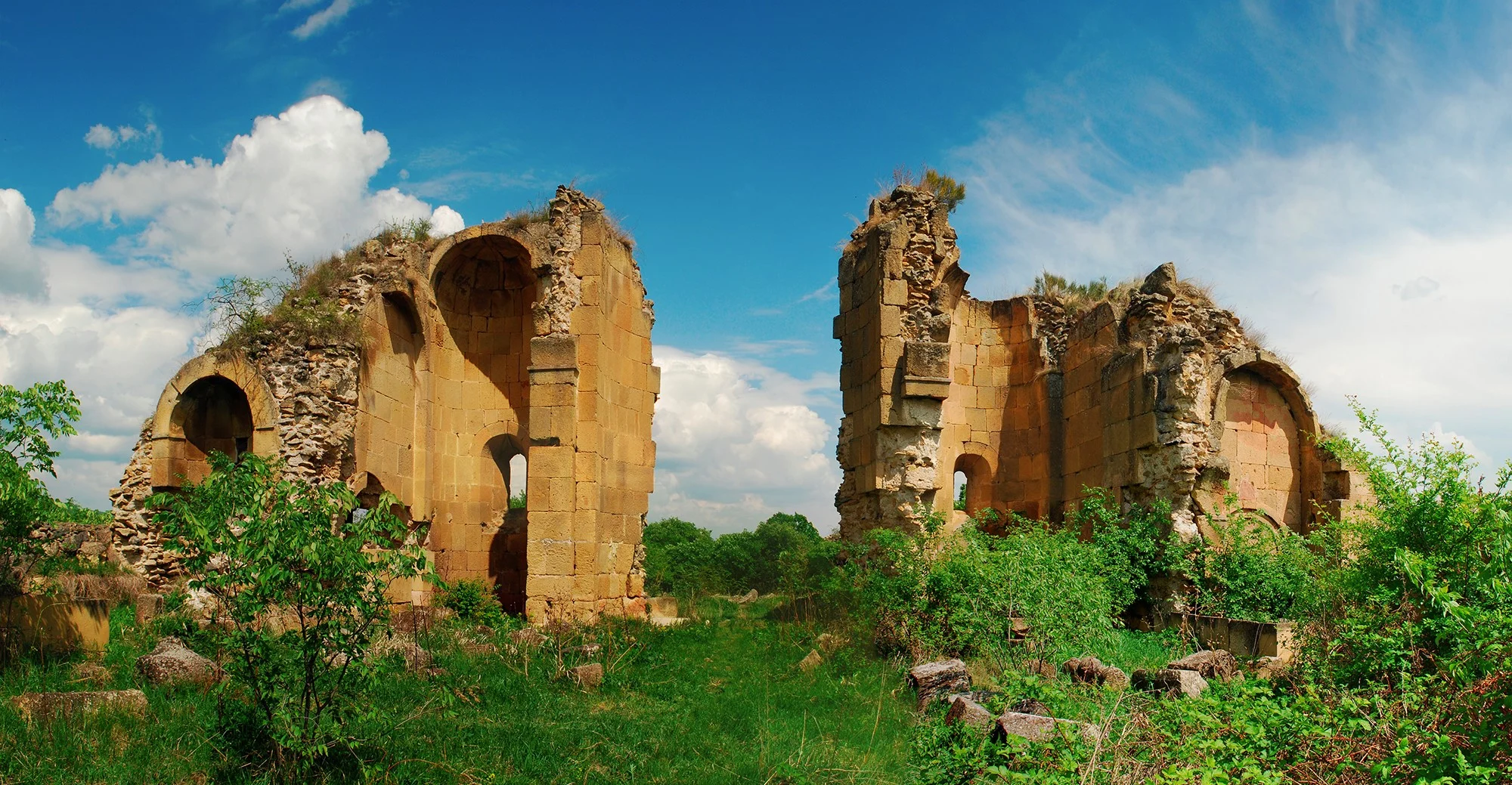
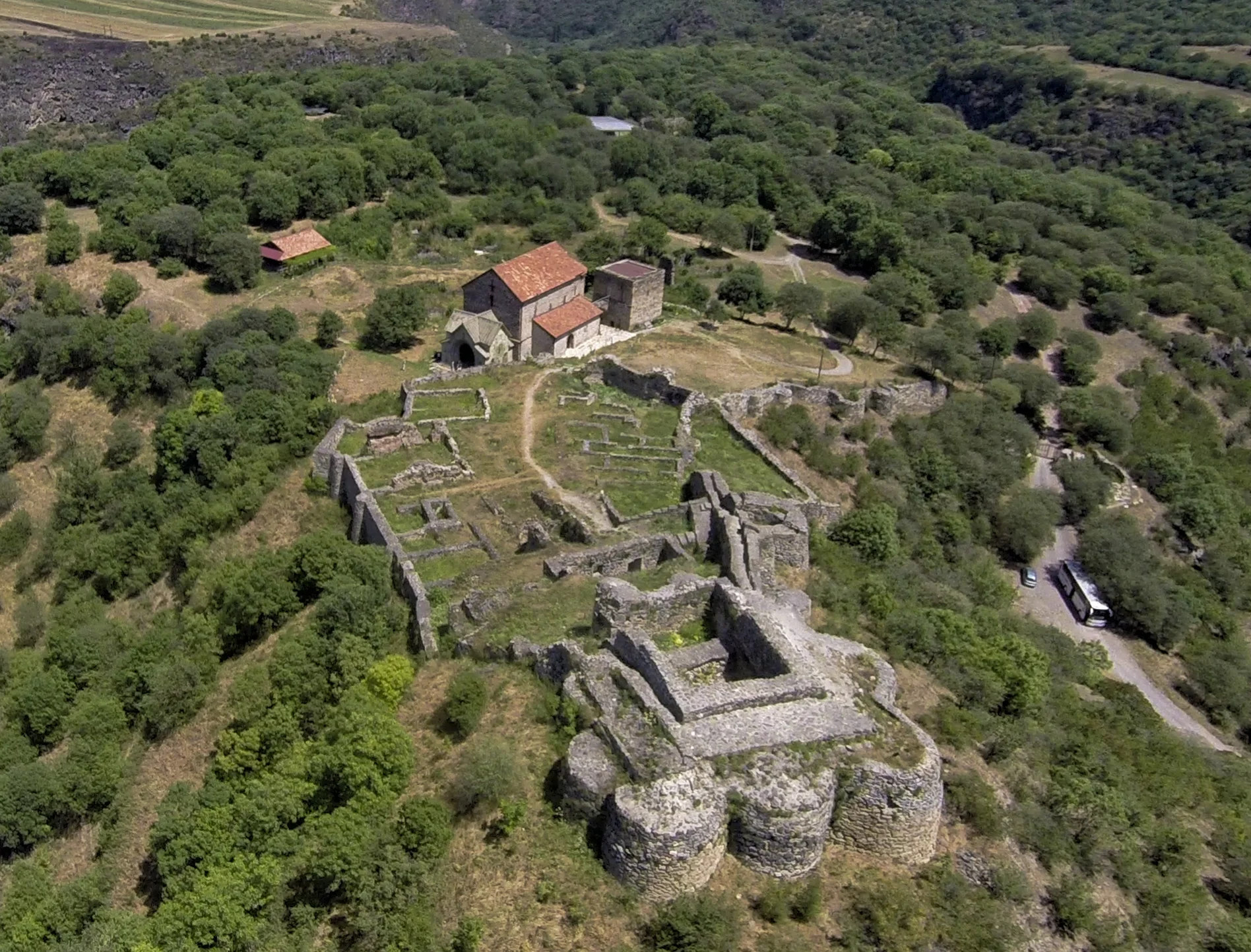
Kintsvisi Monastery — 13th-century frescoes of remarkable quality and color, particularly the depiction of Queen Tamar. Located in a forested gorge south of Kareli. Less visited than the major Kartli churches, and all the better for it.
Kvatakhevi Monastery — 12th-century domed church in a remote, forested setting near the Trialeti Range. Requires a detour and possibly some off-road driving, but rewards with solitude and fine architecture.
Ruisi Cathedral — Early medieval church in the small town of Ruisi, historically important as the seat of a bishopric. Simple but elegant.
Gori and the towns along the highway
Gori — The regional capital (population ~50,000). The Gori Fortress sits on a hill in the center — climb it for views over the town and the Mtkvari valley. The Stalin Museum is the main tourist draw: his birth house (a modest cobbler’s dwelling preserved under a pavilion), a personal railway car, and a museum full of photographs, documents, and gifts from world leaders. Below the fortress, the town has a few decent restaurants and a pleasant central park.
Kaspi — Small town on the highway between Tbilisi and Gori. Not a destination in itself, but the nearby villages of Samtavisi and Kavtiskhevi have important churches.
Khashuri — Railway junction town at the western edge of Shida Kartli, where the road forks toward Borjomi and toward Kutaisi. Practical stop rather than a destination.
Surami — Small town with a ruined fortress and a place in Georgian literature (the legend of Surami Fortress, in which a young man is walled alive to strengthen the walls, is one of the country’s foundational stories). The fortress ruins are modest but atmospheric.
Valleys, forests and the Mtkvari plain
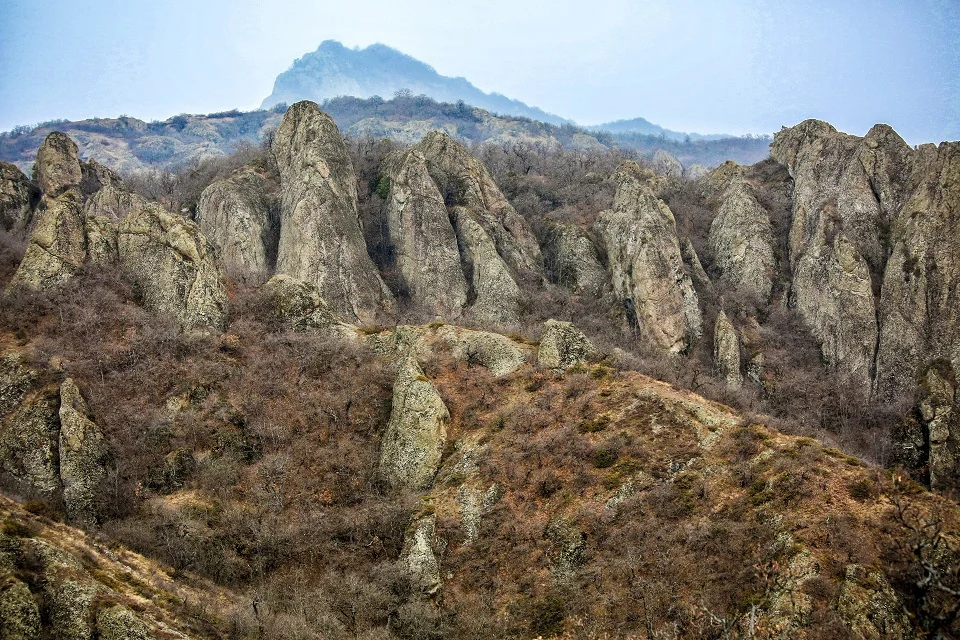
Ateni Valley (Ateni Gorge) — A narrow, beautiful gorge south of Gori. Vineyards line the slopes, small wineries dot the villages, and the Ateni Sioni church stands at its upper end. In winter, a frozen waterfall in the gorge draws ice climbers.
Trialeti Range — The forested mountains south of the valley offer hiking and horse riding, though trails are not well-marked and infrastructure is minimal. Best explored with a local guide.
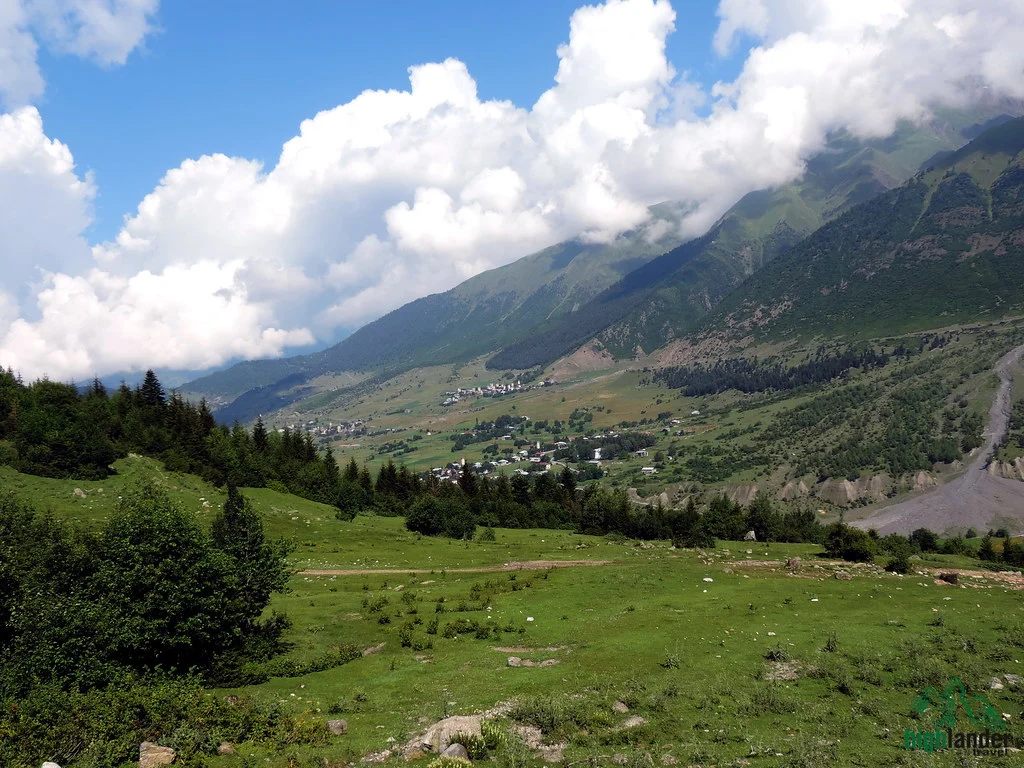
Mtkvari River Valley — The broad, fertile valley floor — orchards (apple, peach, plum), wheat fields, and scattered villages — is the landscape you drive through on the highway, and it has a quiet, pastoral beauty, especially in spring when the fruit trees bloom.
03
AT THE TABLE
Food and Wine in Shida Kartli
Shida Kartli doesn’t have the culinary reputation of Kakheti or Imereti, but it has its own specialties worth seeking out.
Wine
The Ateni Valley is the star here. Atenuri — a dry, lightly sparkling white wine — is made by a distinctive method: the wine undergoes secondary fermentation in qvevri during winter, and the cool temperatures create a natural effervescence. The result is something like a rustic Georgian prosecco, though that comparison doesn’t quite do it justice. Atenuri is hard to find even in Tbilisi restaurants and almost never exported. Tasting it in the valley where it’s made is one of the genuine wine-discovery experiences Georgia still offers.
The main grape varieties grown here are Chinuri (white, crisp, mineral) and Goruli Mtsvane (aromatic white, sometimes made as an amber wine). Both are indigenous to the Kartli region.
Food
Shida Kartli’s cuisine follows the broader eastern Georgian pattern — hearty, meat-oriented, walnut-heavy — but the orchards here are among the best in the country. The region is known for its fruit: apples, peaches, plums, and the dried fruit rolls (tklapi) that appear at every Georgian supra. In season, the roadside fruit stands between Kaspi and Gori are some of the cheapest and best in Georgia.
For dining, Gori has a handful of good local restaurants. Don’t expect the variety of Tbilisi, but expect honest Georgian food at honest prices. A full meal with wine runs 20–30 GEL (€7–10).
04
PLAN YOUR VISIT
Practical Information
Getting There
From Tbilisi:
Marshrutka: To Gori — 5 GEL, ~1.5 hours, departs from Didube Station. Frequent departures throughout the day.
Train: Tbilisi to Gori — about 1 hour, 3–5 GEL depending on class. Several trains daily.
Car: 80 km via the E60 highway, about 1 hour. Well-maintained road, straightforward drive.
Organized tour: The Mtskheta-Gori-Uplistsikhe day tour from Tbilisi is the most popular way to see the region. From $100 per person, includes private transport, guide, and all site visits.
Getting Around
Gori is compact and walkable. Getting to Uplistsikhe, the Ateni Valley, or the outlying churches requires transport.
Taxi from Gori: To Uplistsikhe — 15–20 GEL one way, or negotiate a round trip with wait time (~40–50 GEL). To Ateni Valley — similar price range.
Marshrutka: Local minibuses run to some villages but schedules are irregular and routes don’t always connect to the sites you want.
Rental car: The most flexible option if you want to explore the valley churches and wineries at your own pace. Roads are mostly paved, with some unpaved stretches to Kintsvisi and Kvatakhevi.
Distances from Gori
| Destination | Distance | Drive time |
|---|---|---|
| Uplistsikhe | 10 km | 15 min |
| Ateni Sioni Church | 12 km | 20 min |
| Samtavisi Cathedral | 30 km (east) | 30 min |
| Kintsvisi Monastery | 35 km (south) | 45 min |
| Surami Fortress | 40 km (west) | 40 min |
| Mtskheta | 55 km (east) | 45 min |
| Tbilisi | 80 km | 1 hr |
05
SEASON BY SEASON
When to Visit
Shida Kartli is accessible year-round, but the experience varies significantly by season.
| Season | Temperature | Best for | Notes |
|---|---|---|---|
| Spring (Apr–May) | 14–22°C | Fruit tree blossoms, hiking, photography | The valley is at its most beautiful. Orchards in bloom across the Mtkvari plain. |
| Summer (Jun–Aug) | 25–35°C | All sites open, longest daylight | Can be very hot in the valley. Uplistsikhe is fully exposed — bring water and sun protection. |
| Autumn (Sep–Oct) | 15–25°C | Wine harvest, mild weather, fall colors | Atenuri wine production begins. Best time for wine tasting in the Ateni Valley. |
| Winter (Nov–Mar) | 0–8°C | Ice climbing (Ateni Gorge), uncrowded sites | Cold and grey. All sites open but less atmospheric. The frozen waterfall in Ateni Gorge attracts ice climbers Jan–Feb. |
06
STAY OVERNIGHT
Where to Stay
Most visitors see Shida Kartli as a day trip from Tbilisi, and for the main sites (Uplistsikhe + Gori + Stalin Museum), that works perfectly. But if you want to explore the Ateni Valley wineries, the outlying churches, or simply slow down, an overnight in the region makes sense.
CITY BASE
Gori
A few small hotels and guesthouses. Nothing luxurious, but clean and affordable (€15–30/night). The town has restaurants, shops, and a central park.
WINE COUNTRY
Ateni Valley
A handful of family guesthouses and small wineries that host overnight visitors. More rural, more intimate, and the best option if wine tasting is your priority.
ONWARD TRAVEL
Surami
Occasional guesthouses near the highway junction. Practical if you’re continuing toward Imereti or Borjomi the next day.
07
KNOW BEFORE YOU GO
Travel Tips
Uplistsikhe is exposed
There’s no shade on the site. In summer, go early morning or late afternoon. Bring water, a hat, and comfortable shoes — the rock surfaces can be uneven and hot.
The Stalin Museum is genuinely interesting
Regardless of your politics. Budget 1–1.5 hours. The personal railway car is behind the main building — don’t miss it.
Ateni Valley wineries
Don’t have regular opening hours or tasting rooms in the Western sense. You’ll be visiting someone’s home and cellar. It’s best to arrange visits in advance through a guide or your guesthouse. Don’t expect to just show up.
The occupation line
Do not attempt to approach or cross the South Ossetia boundary line. It’s not marked everywhere, and crossing — even accidentally — can result in detention by Russian-backed forces. Stick to established roads and tourist sites, all of which are well within Georgian-controlled territory.
Combine with Mtskheta
The classic day trip from Tbilisi covers Mtskheta (Jvari + Svetitskhoveli), Gori (fortress + Stalin Museum), and Uplistsikhe in one long but rewarding day. Our Mtskheta-Gori-Uplistsikhe tour handles the logistics.
Photography
Uplistsikhe is best photographed in the golden hour — the sandstone glows in warm light. Ateni Sioni interior frescoes are dark; a fast lens or steady hand helps. Gori Fortress offers the best panoramic viewpoint over the town.
Language
Less English spoken here than in Tbilisi. Russian is widely understood. Basic Georgian phrases go a long way — gamarjoba (hello), madloba (thank you), kargi (good).
08
THE HEARTLAND
Why Shida Kartli Matters
Shida Kartli doesn’t compete with Svaneti’s dramatic peaks or Kakheti’s wine tourism infrastructure. It doesn’t try to. What it offers instead is depth — the kind that comes from being the place where Georgian civilization started to take its modern shape.
At Uplistsikhe, you walk through rooms that were carved before Rome was an empire. At Ateni Sioni, you stand under frescoes painted when the Normans were still conquering England. At the Stalin Museum, you confront a 20th-century legacy that Georgia itself hasn’t fully resolved. And in the Ateni Valley, you drink a wine that hasn’t changed its production method in centuries, in a gorge so quiet you can hear the river from every vineyard.
It’s not flashy. It’s not Instagram-ready. But it’s Georgia at its most essential — the heartland, the core, the place where the story begins.
GEORGIA’S HISTORIC HEARTLAND
Explore Shida Kartli With Highlander Travel
Walk through 2,600 years of history at Uplistsikhe, confront Gori’s complicated 20th-century legacy, discover exceptional medieval churches and taste rare Atenuri wine where it is made.


